


- Afhalen na 1 uur in een winkel met voorraad
- Gratis thuislevering in België vanaf € 30
- Ruim aanbod met 7 miljoen producten
- Afhalen na 1 uur in een winkel met voorraad
- Gratis thuislevering in België vanaf € 30
- Ruim aanbod met 7 miljoen producten





€ 157,95
+ 315 punten
Omschrijving
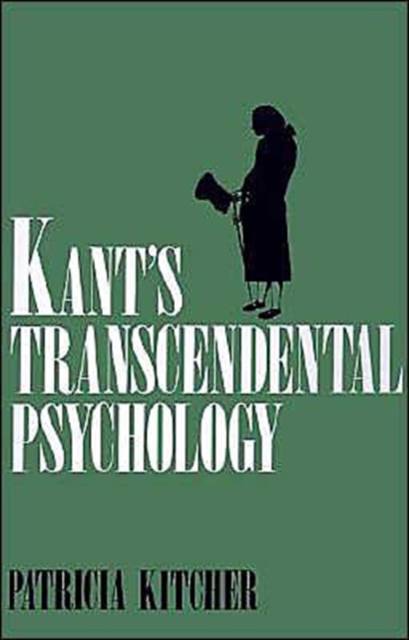
For the last 100 years historians have denigrated the psychology of the Critique of Pure Reason. In opposition, Patricia Kitcher argues that we can only understand the deduction of the categories in terms of Kant's attempt to fathom the psychological prerequisites of thought, and that this investigation illuminates thinking itself. Kant tried to understand the "task environment" of knowledge and thought: Given the data we acquire and the scientific generalizations we make, what basic cognitive capacities are necessary to perform these feats? What do these capacities imply about the inevitable structure of our knowledge? Kitcher specifically considers Kant's claims about the unity of the thinking self; the spatial forms of human perceptions; the relations among mental states necessary for them to have content; the relations between perceptions and judgment; the malleability essential to empirical concepts; the structure of empirical concepts required for inductive inference; and the limits of philosophical insight into psychological processes.
Specificaties
Betrokkenen
- Auteur(s):
- Uitgeverij:
Inhoud
- Aantal bladzijden:
- 312
- Taal:
- Engels
Eigenschappen
- Productcode (EAN):
- 9780195085631
- Verschijningsdatum:
- 30/09/1993
- Uitvoering:
- Paperback
- Formaat:
- Trade paperback (VS)
- Afmetingen:
- 140 mm x 210 mm
- Gewicht:
- 394 g


Alleen bij Standaard Boekhandel
+ 315 punten op je klantenkaart van Standaard Boekhandel
Cadeau

AANGERADEN


Beoordelingen
We publiceren alleen reviews die voldoen aan de voorwaarden voor reviews. Bekijk onze voorwaarden voor reviews.