


- Afhalen na 1 uur in een winkel met voorraad
- Gratis thuislevering in België vanaf € 30
- Ruim aanbod met 7 miljoen producten
- Afhalen na 1 uur in een winkel met voorraad
- Gratis thuislevering in België vanaf € 30
- Ruim aanbod met 7 miljoen producten





€ 89,95
+ 179 punten
Uitvoering
Omschrijving
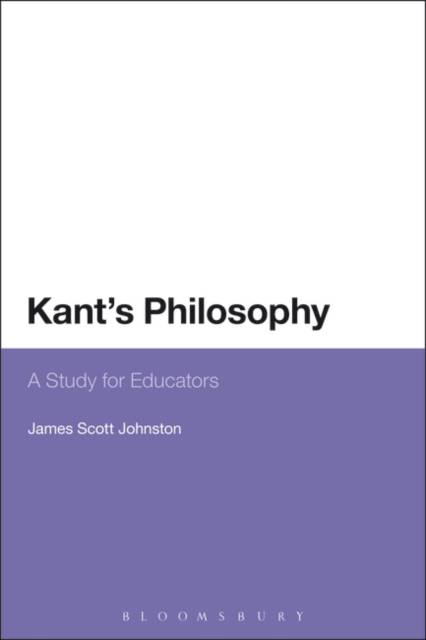
James Scott Johnston's incisive study draws on a holistic reading of Kant: one that views him as developing and testing a complete system (theoretical, practical, historical and anthropological) with education as a vital component. As such, the book begins with an extensive overview of Kant's chief theoretical work (the Critique of Pure Reason), and from that overview distils crucial discussions (the role of practical reason; the claims of the third antinomy) for his moral theory. An extended discussion of Kant's moral and political theories and the place of pedagogy in it follow, with attention to all of Kant's important moral works as well as his chief religious work, Religion within the Bounds of Mere Reason. A discussion of culture and character follows, chiefly through a discussion of Kant's Critique of the Power of Judgment and Anthropology from a Pragmatic Standpoint, together with certain lectures and published essays on history and politics. Finally, an extensive discussion of Kant's published works on education, together with only recently published letters and announcements (in English), is provided. This culminates in Johnston's estimation of what a Kantian education, systematically conceived, might look like: an education that is attentive to theoretical, moral, cultural-historical, and pedagogic domains of Kant's thinking.
Specificaties
Betrokkenen
- Auteur(s):
- Uitgeverij:
Inhoud
- Aantal bladzijden:
- 280
- Taal:
- Engels
Eigenschappen
- Productcode (EAN):
- 9781628925289
- Verschijningsdatum:
- 23/10/2014
- Uitvoering:
- Paperback
- Formaat:
- Trade paperback (VS)
- Afmetingen:
- 156 mm x 234 mm
- Gewicht:
- 394 g


Alleen bij Standaard Boekhandel
+ 179 punten op je klantenkaart van Standaard Boekhandel
Cadeau

AANGERADEN


Beoordelingen
We publiceren alleen reviews die voldoen aan de voorwaarden voor reviews. Bekijk onze voorwaarden voor reviews.