


- Afhalen na 1 uur in een winkel met voorraad
- Gratis thuislevering in België vanaf € 30
- Ruim aanbod met 7 miljoen producten
- Afhalen na 1 uur in een winkel met voorraad
- Gratis thuislevering in België vanaf € 30
- Ruim aanbod met 7 miljoen producten





€ 80,95
+ 161 punten
Omschrijving
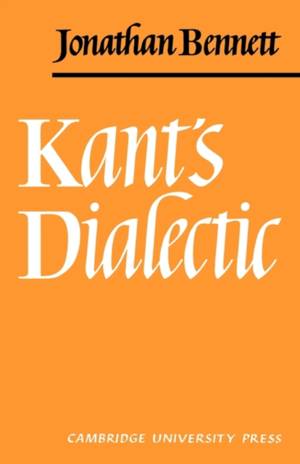
Jonathan Bennett here examines the second half of the Critique of Pure Reason, the Dialectic, where Kant is concerned with problems about substance, the nature of the self, the cosmos, freedom and the existence of God. In this study of the Dialectic in English, the author aims to make accessible and intelligible to students this complex and extremely important part of Kant's great work. There are also extended comparative discussions of related work by some of the most influential of Kant's predecessors, in particular Descartes and Leibniz. As in his earlier book, Professor Bennett offers not passive exegesis but critical assessment; he approaches Kant from the standpoint of contemporary analytical philosophy, identifying those arguments and issues of most continuing interest, and engaging with Kant in discussion of them. His purpose throughout is 'not history with a special subject-matter, but philosophy with a special technique'.
Specificaties
Betrokkenen
- Auteur(s):
- Uitgeverij:
Inhoud
- Aantal bladzijden:
- 304
- Taal:
- Engels
Eigenschappen
- Productcode (EAN):
- 9780521098496
- Verschijningsdatum:
- 20/06/1974
- Uitvoering:
- Paperback
- Formaat:
- Trade paperback (VS)
- Afmetingen:
- 140 mm x 216 mm
- Gewicht:
- 385 g


Alleen bij Standaard Boekhandel
+ 161 punten op je klantenkaart van Standaard Boekhandel
Cadeau

AANGERADEN


Beoordelingen
We publiceren alleen reviews die voldoen aan de voorwaarden voor reviews. Bekijk onze voorwaarden voor reviews.