Standaard Boekhandel gebruikt cookies en gelijkaardige technologieën om de website goed te laten werken en je een betere surfervaring te bezorgen.
Hieronder kan je kiezen welke cookies je wilt inschakelen:
Technische en functionele cookies
Deze cookies zijn essentieel om de website goed te laten functioneren, en laten je toe om bijvoorbeeld in te loggen. Je kan deze cookies niet uitschakelen.
Analytische cookies
Deze cookies verzamelen anonieme informatie over het gebruik van onze website. Op die manier kunnen we de website beter afstemmen op de behoeften van de gebruikers.
Marketingcookies
Deze cookies delen je gedrag op onze website met externe partijen, zodat je op externe platformen relevantere advertenties van Standaard Boekhandel te zien krijgt.
Je kan maximaal 250 producten tegelijk aan je winkelmandje toevoegen. Verwijdere enkele producten uit je winkelmandje, of splits je bestelling op in meerdere bestellingen.
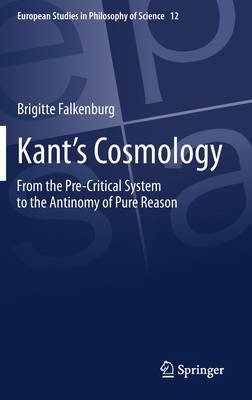
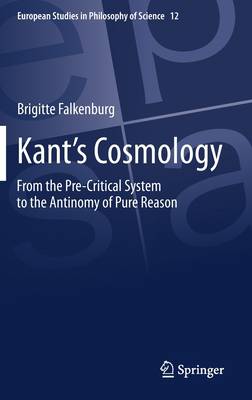
This book provides a comprehensive account of Kant's development from the 1755/56 metaphysics to the cosmological antinomy of 1781. With the Theory of the Heavens (1755) and the Physical Monadology (1756), the young Kant had presented an ambitious approach to physical cosmology based on an atomistic theory of matter, which contributed to the foundations of an all-encompassing system of metaphysics. Why did he abandon this system in favor of his critical view that cosmology runs into an antinomy, according to the Critique of Pure Reason (CPR) ? This book answers this question by focusing on Kant's methodology and the internal problems of his 1755/56 theory of nature. A decisive role for Kant's critical turn plays the argument from incongruent counterparts (1768), which drew much attention among philosophers of science, though not sufficiently in Kant research. Furthermore, the book analyses the genesis of the cosmological antinomy in the 1770s, the logical structure of the antinomy in the CPR , its relation to transcendental idealism, as explained in the "experiment of pure reason" (1787), and its role for the teleology of human reason. The book is addressed to Kant scholars, philosophers of science, and students of Kant's philosophy.