


- Afhalen na 1 uur in een winkel met voorraad
- Gratis thuislevering in België vanaf € 30
- Ruim aanbod met 7 miljoen producten
- Afhalen na 1 uur in een winkel met voorraad
- Gratis thuislevering in België vanaf € 30
- Ruim aanbod met 7 miljoen producten





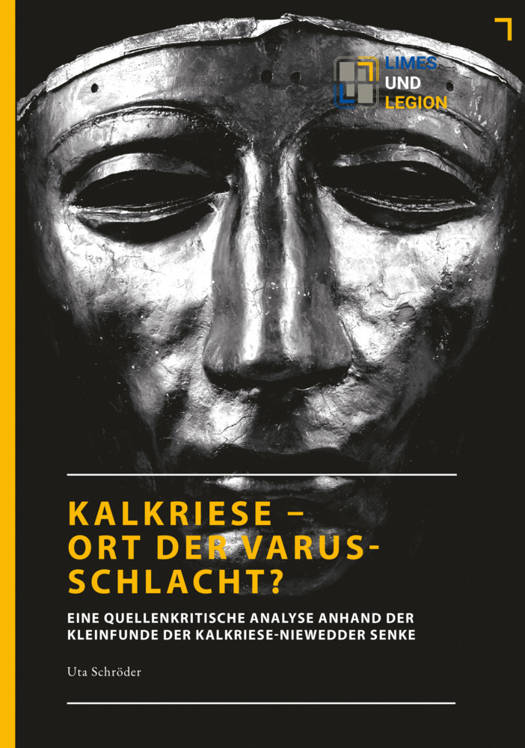
Kalkriese - Ort Der Varusschlacht?
Eine Quellenkritische Analyse Anhand Der Kleinfunde Der Kalkriese-Niewedder Senke
Uta Schrder
€ 93,95
+ 187 punten
Omschrijving
English summary: Kalkriese - a battlefield that changed Europe. A site that still raises questions. A study that provides new answers.For decades, the early Roman site of Kalkriese in the Osnabruck region has fascinated scholars like few other places. It is widely believed to be the site of the legendary Battle of the Teutoburg Forest in AD 9, in which the Germanic tribes achieved a decisive victory over the Roman army. A closer examination, however, reveals a highly complex interplay of archaeological and historical evidence that has so far prevented a definitive assessment of the site. What truly happened in this landscape in the early first century AD? Which Roman troops fought here - and against whom? And how reliable is what we believe we know?This groundbreaking study by Uta Schroder, originally submitted as a doctoral dissertation at Ludwig Maximilian University of Munich, for the first time presents a comprehensive and critical synthesis of approximately 5,400 Early Imperial small finds, including more than 1,100 objects previously unpublished. In doing so, the work addresses a long-standing research gap. Through meticulous analysis, the author examines the dating, function, and spatial distribution of the artefacts, opening up a new and previously unavailable perspective on the chronology and character of the site.The analysis leads to a key conclusion: a battle involving Roman infantry and cavalry units in the late Augustan-Tiberian period can be demonstrated beyond doubt. At the same time, the study reveals the extent to which agricultural activity, the selection of excavation areas, and uneven survey strategies have distorted previous interpretations of the site. Many long-held assumptions are called into question - from the concept of a fixed "Kalkriese horizon" to reconstructions of the actual course of the fighting.This volume presents Kalkriese as one of the most significant, yet methodologically challenging archaeological sites of the Roman Empire in Europe. It clearly outlines the current state of research, identifies interpretative pitfalls that must be corrected, and highlights the immense potential for future investigations.A seminal work for archaeology, ancient history, and for all those who seek to understand how scientific inquiry transforms material remains into historical knowledge - and how much history still lies hidden in the soil. German description: Kalkriese - ein Schlachtfeld, das Europa veranderte. Ein Fundort, der noch immer Fragen aufwirft. Eine Forschungsarbeit, die neue Antworten gibt.Seit Jahrzehnten fasziniert der fruhromische Fundort Kalkriese im Osnabrucker Land die Wissenschaft wie kaum ein anderer Ort. Gilt er vielen als Schauplatz der legendaren Varusschlacht 9 n. Chr., bei der germanische Stamme erfolgreich gegen die romische Armee kampften. Doch ein naherer Blick offenbart ein sehr komplexes Geflecht aus archaologischen und historischen Quellen, was eine eindeutige Beurteilung des Platzes bisher nicht ermoglichte. Was geschah wirklich im fruhen 1. Jahrhundert nach Christus in dieser Landschaft? Welche romischen Truppen kampften hier - und gegen wen? Und wie zuverlassig ist das, was wir zu wissen glauben?Die richtungsweisende Studie von Uta Schroder, entstanden als Dissertation an der Ludwig-Maximilians-Universitat Munchen, liefert erstmals eine umfassende, kritische Gesamtschau von rund 5.400 kaiserzeitlichen Kleinfunden - darunter uber 1.100 bislang vollig unpublizierte Objekte. Die Arbeit schliesst damit die Lucke eines jahrelangen Forschungsdesiderates. In akribischer Detailarbeit untersucht die Archaologin Datierung, Funktion und Verteilung der Artefakte und eroffnet damit einen neuen, bislang fehlenden Zugang zur Chronologie und zum Charakter des Fundplatzes.Die Analyse fuhrt zu einem zentralen Ergebnis: Zweifelsfrei lasst sich eine Schlacht mit Beteiligung romischer Infanterie und Kavallerie fur die spataugusteisch-tiberische Zeit nachweisen. Gleichzeitig wird deutlich, wie sehr landwirtschaftliche Eingriffe, die Auswahl von Grabungsarealen und ungleichmassige Prospektionen die bisherige Interpretation des Fundplatzes verzerrt haben. Viele vermeintliche Gewissheiten geraten ins Wanken - vom "Kalkriese-Horizont" bis zur Frage nach dem tatsachlichen Schlachtgeschehen.Dieses Werk zeigt Kalkriese als einen der bedeutendsten, aber zugleich anspruchsvollsten archaologischen Fundorte der romischen Kaiserzeit in Europa. Es legt offen, wo die Forschung steht, welche Fehlschlusse korrigiert werden mussen und welches enorme Potenzial zukunftige Untersuchungen bergen.Ein Standardwerk fur Archaologie, Alte Geschichte und alle, die verstehen wollen, wie Wissenschaft aus Funden Geschichte schreibt - und wie viel Geschichte im Boden noch unerzahlt schlummert.
Specificaties
Betrokkenen
- Auteur(s):
- Uitgeverij:
Inhoud
- Aantal bladzijden:
- 352
- Taal:
- Duits
- Reeks:
Eigenschappen
- Productcode (EAN):
- 9783752009408
- Verschijningsdatum:
- 15/12/2025
- Uitvoering:
- Hardcover
- Formaat:
- Genaaid
- Afmetingen:
- 215 mm x 25 mm
- Gewicht:
- 2775 g


Alleen bij Standaard Boekhandel
+ 187 punten op je klantenkaart van Standaard Boekhandel
Cadeau

AANGERADEN


Beoordelingen
We publiceren alleen reviews die voldoen aan de voorwaarden voor reviews. Bekijk onze voorwaarden voor reviews.