



Je cadeautjes zeker op tijd in huis hebben voor de feestdagen? Kom langs in onze winkels en vind het perfecte geschenk!
- Afhalen na 1 uur in een winkel met voorraad
- Gratis thuislevering in België vanaf € 30
- Ruim aanbod met 7 miljoen producten
Je cadeautjes zeker op tijd in huis hebben voor de feestdagen? Kom langs in onze winkels en vind het perfecte geschenk!
- Afhalen na 1 uur in een winkel met voorraad
- Gratis thuislevering in België vanaf € 30
- Ruim aanbod met 7 miljoen producten





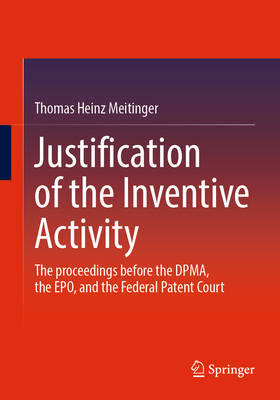
Justification of the Inventive Activity
The Proceeding Before the Dpma, the Epo, and the Federal Patent Court
Thomas Heinz Meitinger
Paperback | Engels
€ 106,95
+ 213 punten
Omschrijving
A patent can be a very important asset for a company. However, the path to obtaining one is often challenging. Only inventions that are completely new and demonstrate an inventive step are granted a patent. Therefore, the key criteria for patent grant are novelty and inventive step. The justification of the inventive step regularly determines the outcome of the examination proceedings before the patent offices--the German Patent and Trade Mark Office (DPMA) and the European Patent Office (EPO)--and in contentious cases before the Federal Patent Court (BPatG). Consequently, the criterion of inventive step deserves the utmost attention. This specialized book provides readers with the legal know-how necessary to successfully justify the inventive step of their invention in proceedings before the DPMA, the EPO, and the BPatG, or to effectively challenge a third party's patent in litigation.
Specificaties
Betrokkenen
- Auteur(s):
- Uitgeverij:
Inhoud
- Aantal bladzijden:
- 118
- Taal:
- Engels
Eigenschappen
- Productcode (EAN):
- 9783662727348
- Verschijningsdatum:
- 24/02/2026
- Uitvoering:
- Paperback
- Formaat:
- Trade paperback (VS)
- Afmetingen:
- 168 mm x 240 mm


Alleen bij Standaard Boekhandel
+ 213 punten op je klantenkaart van Standaard Boekhandel
CADEAU


Beoordelingen
We publiceren alleen reviews die voldoen aan de voorwaarden voor reviews. Bekijk onze voorwaarden voor reviews.