


- Afhalen na 1 uur in een winkel met voorraad
- Gratis thuislevering in België vanaf € 30
- Ruim aanbod met 7 miljoen producten
- Afhalen na 1 uur in een winkel met voorraad
- Gratis thuislevering in België vanaf € 30
- Ruim aanbod met 7 miljoen producten





Omschrijving
Shortlisted for the 2024 O.L. Davis Outstanding Book Award from the AATC
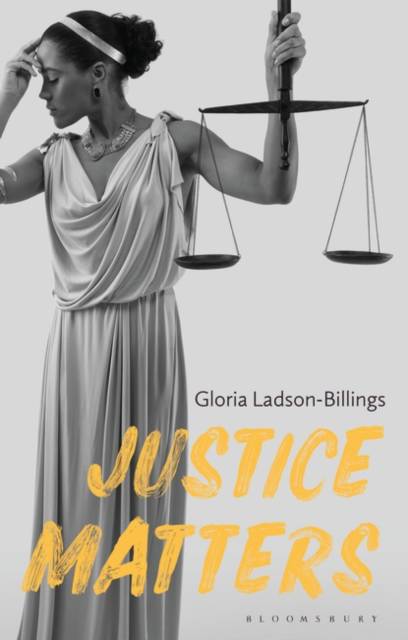
Social justice has become a buzzword to suggest we are serious about racism, sexism, classism, heterosexism, and ableism. But justice remains elusive and contested. It is written in founding documents, street soldiers declare it: 'no justice, no peace!', but is absent from public interactions. Building on Cornel West's notion of 'race matters' and the Black Lives Matter movement, Justice Matters strips away the rhetoric that keeps us from understanding what justice is, particularly in education, but also in relation to health, race, economy, and environment. Ladson-Billings interrogates the meaning of justice, looking at Western notions of justice from Aristotle to Kant to Rorty, alongside Eastern notions of Justice, from Lao Tzu, to Rumi to Frantz Fanon and W.E.B. Dubois. She shows how the pandemic has exposed deep injustices in society, and how schooling and the curriculum are largely blind to the race, White supremacy, and the racial trauma that plagues marginalized people. She argues that teaching strategies that rely on hierarchy, such as ability groups, tell students who they are and what we expect of them, supposedly doing a 'just' thing but also suggesting that some people are 'less' than others - the very narrative of White supremacy. Schooling is the genesis of exclusion and incarceration, with strategies like classroom exclusion, suspension, and expulsion laying the groundwork for the school to prison pipeline. Offering hope for a way forward, she looks at how hip hop can champion justice, and considers justice in the context of social movements, including Black Lives Matter, MoveOn.org, and #MeToo, and explores the pros and cons of 'hashtag activism'. Ultimately she shows us how justice can and should be the central tenet of education and society, and how we can save it from being obscured and watered down.Specificaties
Betrokkenen
- Auteur(s):
- Uitgeverij:
Inhoud
- Aantal bladzijden:
- 184
- Taal:
- Engels
Eigenschappen
- Productcode (EAN):
- 9781350268821
- Verschijningsdatum:
- 14/12/2023
- Uitvoering:
- Hardcover
- Formaat:
- Genaaid
- Afmetingen:
- 140 mm x 216 mm
- Gewicht:
- 353 g



Alleen bij Standaard Boekhandel
+ 254 punten op je klantenkaart van Standaard Boekhandel
Cadeau

AANGERADEN


Beoordelingen
We publiceren alleen reviews die voldoen aan de voorwaarden voor reviews. Bekijk onze voorwaarden voor reviews.