


- Afhalen na 1 uur in een winkel met voorraad
- Gratis thuislevering in België vanaf € 30
- Ruim aanbod met 7 miljoen producten
- Afhalen na 1 uur in een winkel met voorraad
- Gratis thuislevering in België vanaf € 30
- Ruim aanbod met 7 miljoen producten





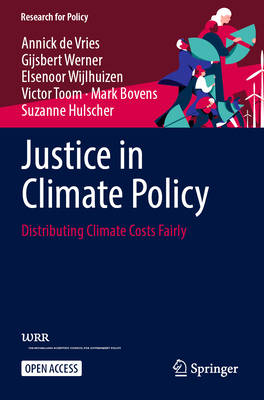
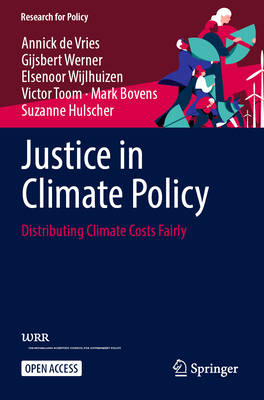
Justice in Climate Policy
Distributing Climate Costs Fairly
Annick de Vries, Gijsbert Werner, Elsenoor Wijlhuizen, Victor Toom, Mark Bovens, Suzanne Hulscher
€ 108,45
+ 216 punten
Uitvoering
Omschrijving
This open access book is looking into ways to achieve just climate policy within a country. The authors of this monograph share a unique, timely and original vision: continuous support for climate policy is more likely to emerge when citizens find that the distribution of the bill for climate costs is fair. But what is a fair distribution of climate costs? This is an important question because financial costs of mitigation (reducing greenhouse gases), adaptation (adapting to climate change) and damage (compensating or compensating after weather extremes) increase significantly in the coming decades. Drawing on philosophy and ethics, the authors propose ten principles for achieving just distributions of domestic climate costs. Examples of such principles are individual responsibility, the polluter pays, greatest utility and capacity to pay. Yet what a fair distribution is, depends on, for example, political preferences and the policy issue at hand. Empirical research on designing climate policies, however, shows that distributive principles are not part of the political, policy, and public discussions. The authors therefore argue that explicit attention to principles of just distribution at the start of a policy process contributes to support for climate policy. This book provides tools to professionals and students to achieve justice in climate policy.
Specificaties
Betrokkenen
- Auteur(s):
- Uitgeverij:
Inhoud
- Aantal bladzijden:
- 164
- Taal:
- Engels
- Reeks:
Eigenschappen
- Productcode (EAN):
- 9783031594298
- Verschijningsdatum:
- 17/06/2025
- Uitvoering:
- Paperback
- Afmetingen:
- 155 mm x 10 mm
- Gewicht:
- 277 g


Alleen bij Standaard Boekhandel
+ 216 punten op je klantenkaart van Standaard Boekhandel
Cadeau

AANGERADEN


Beoordelingen
We publiceren alleen reviews die voldoen aan de voorwaarden voor reviews. Bekijk onze voorwaarden voor reviews.