


- Afhalen na 1 uur in een winkel met voorraad
- Gratis thuislevering in België vanaf € 30
- Ruim aanbod met 7 miljoen producten
- Afhalen na 1 uur in een winkel met voorraad
- Gratis thuislevering in België vanaf € 30
- Ruim aanbod met 7 miljoen producten





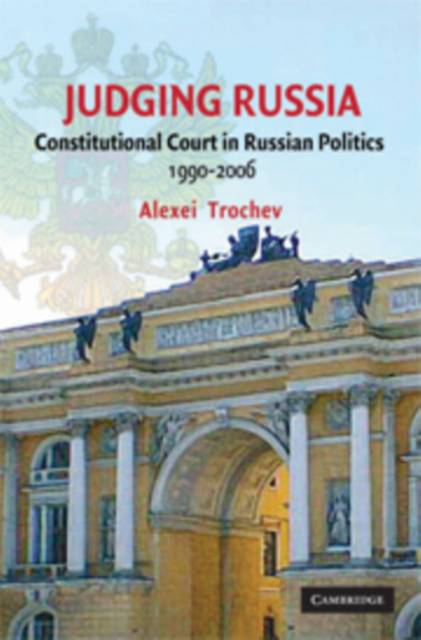
Judging Russia
Constitutional Court in Russian Politics, 1990-2006
Alexei Trochev
Hardcover | Engels
€ 123,95
+ 247 punten
Omschrijving
This book is the first in-depth study of the actual role that the Russian Constitutional Court played in protecting fundamental rights and resolving legislative-executive struggles and federalism disputes in both Yeltsin's and Putin's Russia. Trochev argues that judicial empowerment is a non-linear process with unintended consequences and that courts that depend on their reputation flourish only if an effective and capable state is there to support them. This is because judges can rely only on the authoritativeness of their judgments, unlike politicians and bureaucrats, who have the material resources necessary to respond to judicial decisions. Drawing upon systematic analysis of all decisions of the Russian Court (published and unpublished) and previously unavailable materials on their (non-)implementation, and resting on a combination of the approaches from comparative politics, law, and public administration, this book shows how and why judges attempted to reform Russia's governance and fought to ensure compliance with their judgments.
Specificaties
Betrokkenen
- Auteur(s):
- Uitgeverij:
Inhoud
- Aantal bladzijden:
- 384
- Taal:
- Engels
Eigenschappen
- Productcode (EAN):
- 9780521887434
- Verschijningsdatum:
- 28/04/2008
- Uitvoering:
- Hardcover
- Formaat:
- Ongenaaid / garenloos gebonden
- Afmetingen:
- 152 mm x 229 mm
- Gewicht:
- 680 g


Alleen bij Standaard Boekhandel
+ 247 punten op je klantenkaart van Standaard Boekhandel
AANGERADEN


Beoordelingen
We publiceren alleen reviews die voldoen aan de voorwaarden voor reviews. Bekijk onze voorwaarden voor reviews.