


- Afhalen na 1 uur in een winkel met voorraad
- Gratis thuislevering in België vanaf € 30
- Ruim aanbod met 7 miljoen producten
- Afhalen na 1 uur in een winkel met voorraad
- Gratis thuislevering in België vanaf € 30
- Ruim aanbod met 7 miljoen producten





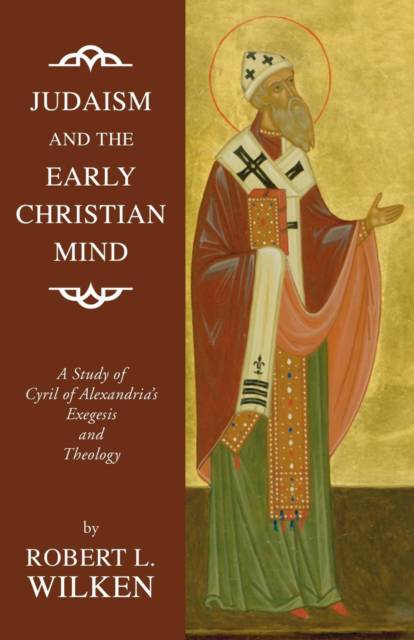
Judaism and the Early Christian Mind
A Study of Cyril of Alexandria's Exegesis and Theology
Robert L Wilken
Paperback | Engels
€ 32,45
+ 64 punten
Omschrijving
Unlike most studies of the thought of the early Church, which have concentrated on the Christian encounter with Hellenism, this investigation of the writings of Cyril of Alexandria reveals the crucial influence of the polemical conflicts with Judaism voiced by the early fathers. After tracing the relationships between Christians and Jews during the first four centuries A.D., Mr. Wilken demonstrates how Cyril's exegetical writings - two-thirds of the extant corpus - grew directly out of his polemical positions. He then discusses the influence of such thinking on Cyril's christology and on his controversy with Nestorius, the bishop of Constantinople during the early fifth century. His concluding analysis of the larger problem of Christian attitudes toward the Jews concentrates on the difficulties raised by the Christians' inability to understand Judaism as anything other than an inferior foreshadowing of Christianity.
Specificaties
Betrokkenen
- Auteur(s):
- Uitgeverij:
Inhoud
- Aantal bladzijden:
- 272
- Taal:
- Engels
Eigenschappen
- Productcode (EAN):
- 9781592449125
- Verschijningsdatum:
- 30/09/2004
- Uitvoering:
- Paperback
- Formaat:
- Trade paperback (VS)
- Afmetingen:
- 143 mm x 215 mm
- Gewicht:
- 335 g


Alleen bij Standaard Boekhandel
+ 64 punten op je klantenkaart van Standaard Boekhandel
Cadeau

AANGERADEN


Beoordelingen
We publiceren alleen reviews die voldoen aan de voorwaarden voor reviews. Bekijk onze voorwaarden voor reviews.