


- Afhalen na 1 uur in een winkel met voorraad
- Gratis thuislevering in België vanaf € 30
- Ruim aanbod met 7 miljoen producten
- Afhalen na 1 uur in een winkel met voorraad
- Gratis thuislevering in België vanaf € 30
- Ruim aanbod met 7 miljoen producten





€ 220,45
+ 440 punten
Eenvoudig bestellen
Veilig betalen


Gratis thuislevering vanaf € 30 (via bpost)
Gratis levering in je Standaard Boekhandel
Omschrijving
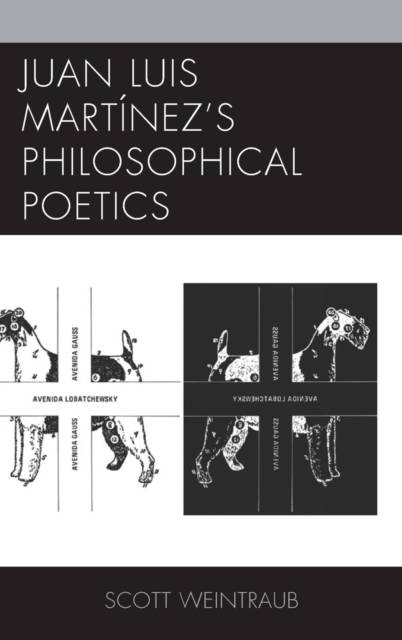
Juan Luis Martínez's Philosophical Poetics is the first English-language monograph on this Chilean visual artist and poet (1942-1993). It has two principal aims: first, to introduce Martínez's poetry and radical aesthetics to English-speaking audiences, and second, to carefully analyze key aspects of his literary production. The readings undertaken in this book explore Martínez's intricate textual formalisms, the self-effacement that characterizes his poetry, and the tension between his local (Latin American, Chilean) aspect and the cosmopolitanism or transnationalism that insists on the global relevance of his work. Through his artistic engagement with a number of esoteric concepts--for example, his recuperation of pataphysical "logic" and Oulipian combinatorics, mathematical reasoning, Eastern thought, and the historical avant-gardes--Martínez creates a rigorous quasi-system of citation and erasure that is a philosophical poetics as well as a poetic philosophy. Juan Luis Martínez's Philosophical Poetics thus addresses all major publications by this groundbreaking Chilean artist and poet in order to read his difficult, experimental texts by focusing on the tension he creates between philosophical, political, literary, and scientific discourses.
Specificaties
Betrokkenen
- Auteur(s):
- Uitgeverij:
Inhoud
- Aantal bladzijden:
- 246
- Taal:
- Engels
Eigenschappen
- Productcode (EAN):
- 9781611486070
- Verschijningsdatum:
- 11/12/2014
- Uitvoering:
- Hardcover
- Formaat:
- Genaaid
- Afmetingen:
- 160 mm x 234 mm
- Gewicht:
- 498 g


Alleen bij Standaard Boekhandel
+ 440 punten op je klantenkaart van Standaard Boekhandel
CADEAU

AANGERADEN


Beoordelingen
We publiceren alleen reviews die voldoen aan de voorwaarden voor reviews. Bekijk onze voorwaarden voor reviews.