


- Afhalen na 1 uur in een winkel met voorraad
- Gratis thuislevering in België vanaf € 30
- Ruim aanbod met 7 miljoen producten
- Afhalen na 1 uur in een winkel met voorraad
- Gratis thuislevering in België vanaf € 30
- Ruim aanbod met 7 miljoen producten





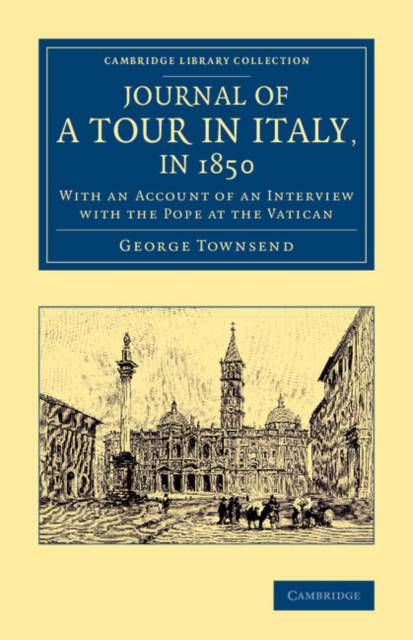
Journal of a Tour in Italy, in 1850
With an Account of an Interview with the Pope at the Vatican
George Townsend
€ 74,45
+ 148 punten
Omschrijving
A Church of England clergyman and biblical scholar, George Townsend (1788-1857) gained recognition for preparing chronological arrangements of both the Old and New Testament. First published in 1850, the present work is an intriguing account of his journey to Italy for an audience with Pope Pius IX, whom he intended to convert to Protestantism. Townsend's journal features details of his stay in Paris, where he was received by the city's archbishop, as well as remarks on the churches and clergy he encountered along the way. In Rome and the Vatican, he visited the main sites of interest while commenting on points of doctrinal divergence and the hospitality shown towards him. Warmly received by Pius IX, who chose to interpret the visit as ecumenical, Townsend inevitably failed in his ultimate objective. Tendentious and forthright, his work sheds light on a strain of English anti-Catholicism.
Specificaties
Betrokkenen
- Auteur(s):
- Uitgeverij:
Inhoud
- Aantal bladzijden:
- 318
- Taal:
- Engels
- Reeks:
Eigenschappen
- Productcode (EAN):
- 9781108069267
- Verschijningsdatum:
- 20/03/2014
- Uitvoering:
- Paperback
- Formaat:
- Trade paperback (VS)
- Afmetingen:
- 140 mm x 216 mm
- Gewicht:
- 403 g


Alleen bij Standaard Boekhandel
+ 148 punten op je klantenkaart van Standaard Boekhandel
Cadeau

AANGERADEN


Beoordelingen
We publiceren alleen reviews die voldoen aan de voorwaarden voor reviews. Bekijk onze voorwaarden voor reviews.