


- Afhalen na 1 uur in een winkel met voorraad
- Gratis thuislevering in België vanaf € 30
- Ruim aanbod met 7 miljoen producten
- Afhalen na 1 uur in een winkel met voorraad
- Gratis thuislevering in België vanaf € 30
- Ruim aanbod met 7 miljoen producten





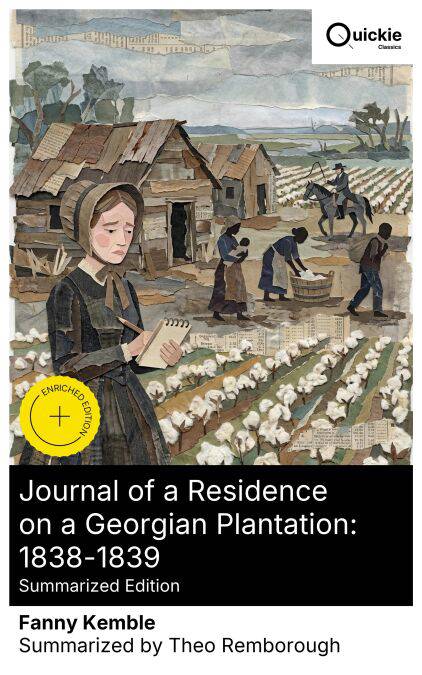
Journal of a Residence on a Georgian Plantation: 1838-1839 (Summarized Edition) E-BOOK
Enriched edition. Abolitionist diary of 19th-century Georgia: reflections on slavery and racial dynamics
Fanny Kemble
E-book | Engels
€ 1,99
+ 1 punten
Omschrijving
Journal of a Residence on a Georgian Plantation: 1838–1839 is Kemble's searing, day-by-day account of life on her husband Pierce Butler's Sea Island estates. Mixing the immediacy of a stage professional's scene-painting with the moral ledger of a reformer, she records housing, rations, childbirth, illness, overseer violence, and the economics of Sea Island cotton. Part travel writing, part abolitionist testimony, the journal's dialogic sketches and statistical notations situate it within women's life-writing and antebellum antislavery literature, while its candid self-scrutiny exposes the blind spots of an elite British observer. Daughter of the famed Kemble theatrical dynasty, Fanny Kemble married American heir Pierce Butler in 1834 and reluctantly wintered on his Georgia plantations in 1838–39. The experience shattered her marriage and transformed her politics. Originally composed as letters, the journal was published in 1863 in London to influence British opinion against Confederate slavery and to explain her estrangement. Scholars and general readers alike will value this book for its granular detail and its anguished, self-interrogating voice. Read it alongside slave narratives, legal documents, and plantation records; read it, above all, to witness conscience confronting the machinery of bondage.
Quickie Classics summarizes timeless works with precision, preserving the author's voice and keeping the prose clear, fast, and readable—distilled, never diluted. Enriched Edition extras: Introduction · Synopsis · Historical Context · Brief Analysis · 4 Reflection Q&As · Editorial Footnotes.
Quickie Classics summarizes timeless works with precision, preserving the author's voice and keeping the prose clear, fast, and readable—distilled, never diluted. Enriched Edition extras: Introduction · Synopsis · Historical Context · Brief Analysis · 4 Reflection Q&As · Editorial Footnotes.
Specificaties
Betrokkenen
- Auteur(s):
- Uitgeverij:
Inhoud
- Aantal bladzijden:
- 122
- Taal:
- Engels
Eigenschappen
- Productcode (EAN):
- 8596547879411
- Verschijningsdatum:
- 9/01/2026
- Uitvoering:
- E-book
- Beveiligd met:
- Digital watermarking
- Formaat:
- ePub


Alleen bij Standaard Boekhandel
+ 1 punten op je klantenkaart van Standaard Boekhandel
Cadeau

AANGERADEN


Beoordelingen
We publiceren alleen reviews die voldoen aan de voorwaarden voor reviews. Bekijk onze voorwaarden voor reviews.