


- Afhalen na 1 uur in een winkel met voorraad
- Gratis thuislevering in België vanaf € 30
- Ruim aanbod met 7 miljoen producten
- Afhalen na 1 uur in een winkel met voorraad
- Gratis thuislevering in België vanaf € 30
- Ruim aanbod met 7 miljoen producten




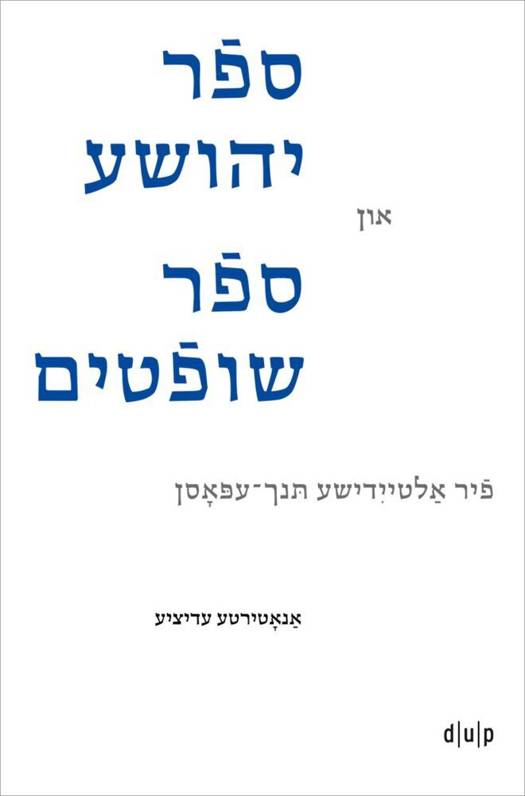
Joshua and Judges in Yiddish Verse
Four Early Modern Epics. an Annotated Edition
Hardcover | Engels, Duits | Jiddistik. Edition Und Forschung / Yiddish. Editions and Research / ייִד | nr. 5
€ 39,95
Omschrijving
This book offers annotated editions of four distinct sixteenth-century Yiddish epic poems, all preserved in single copies. Two of them retell the narrative found in the book of Joshua, and two relate the events described in the book of Judges. As typical specimens of the once popular literary genre, the Old Yiddish biblical epic, the content of the works is based on Jewish sources, while their style and form were influenced by German epic and chivalric literature. The epics often elaborate on the biblical narrative, with rich passages that echo the cultural setting in which they were composed, presumably German and Italian lands. The four epics are presented here for the first time in modern academic editions. They are studied and compared with one another, and footnotes provide information concerning the sources of additions and changes, translation methods, historical details, obscure words and idiomatic expressions, and more. As these epics represent some of the earliest examples of biblical epics in Yiddish, the discussion also touches upon the origins of the genre, tracing its path from orality to written text. The annotated edition presents the original Old Yiddish texts together with an English introduction.
Specificaties
Betrokkenen
- Uitgeverij:
Inhoud
- Aantal bladzijden:
- 416
- Taal:
- Engels, Duits
- Reeks:
- Reeksnummer:
- nr. 5
Eigenschappen
- Productcode (EAN):
- 9783110740615
- Verschijningsdatum:
- 21/06/2022
- Uitvoering:
- Hardcover
- Formaat:
- Genaaid
- Afmetingen:
- 180 mm x 251 mm
- Gewicht:
- 839 g

Alleen bij Standaard Boekhandel
AANGERADEN


Beoordelingen
We publiceren alleen reviews die voldoen aan de voorwaarden voor reviews. Bekijk onze voorwaarden voor reviews.