


- Afhalen na 1 uur in een winkel met voorraad
- Gratis thuislevering in België vanaf € 30
- Ruim aanbod met 7 miljoen producten
- Afhalen na 1 uur in een winkel met voorraad
- Gratis thuislevering in België vanaf € 30
- Ruim aanbod met 7 miljoen producten





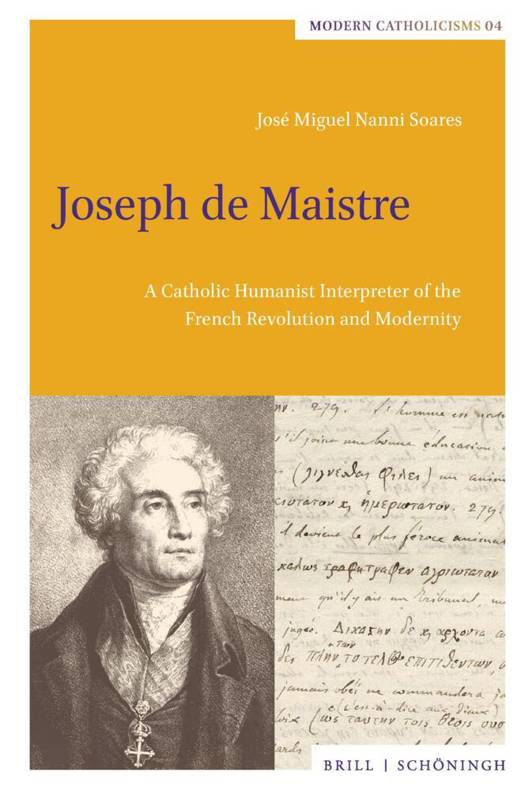
Joseph de Maistre
A Catholic Humanist Interpreter of the French Revolution and Modernity
José Miguel Nanni Soares
€ 127,45
+ 254 punten
Omschrijving
This study attempts to synthesize Joseph de Maistre's historical (and political) reflections on a phenomenon as momentous as the French Revolution. Although not a professional historian or philosopher, Maistre's merit lies in integrating his interpretation of the French Revolution within the broader framework of cultural transformations (particularly those of a moral and epistemological nature) that underpinned it: the Protestant Reformation and the Enlightenment. José Miguel Nanni Soares seeks to demonstrate that the Savoyard Count's reaction to the Enlightenment-revolutionary project not only aligns with contemporary interpretations of the genesis of the modern world but also, despite his vehement defense of the system of authority (monarchy as a political regime and Catholicism as a spiritual authority), his traditionalism did not lead to a mere desire for a straightforward restoration of the Ancien Régime. Paradoxically, his thought was informed by humanist and rationalist premises.
Specificaties
Betrokkenen
- Auteur(s):
- Uitgeverij:
Inhoud
- Aantal bladzijden:
- 572
- Taal:
- Engels
- Reeks:
- Reeksnummer:
- nr. 4
Eigenschappen
- Productcode (EAN):
- 9783506798350
- Verschijningsdatum:
- 1/06/2026
- Uitvoering:
- Hardcover
- Formaat:
- Genaaid
- Afmetingen:
- 155 mm x 235 mm


Alleen bij Standaard Boekhandel
+ 254 punten op je klantenkaart van Standaard Boekhandel
AANGERADEN


Beoordelingen
We publiceren alleen reviews die voldoen aan de voorwaarden voor reviews. Bekijk onze voorwaarden voor reviews.