Standaard Boekhandel gebruikt cookies en gelijkaardige technologieën om de website goed te laten werken en je een betere surfervaring te bezorgen.
Hieronder kan je kiezen welke cookies je wilt inschakelen:
Technische en functionele cookies
Deze cookies zijn essentieel om de website goed te laten functioneren, en laten je toe om bijvoorbeeld in te loggen. Je kan deze cookies niet uitschakelen.
Analytische cookies
Deze cookies verzamelen anonieme informatie over het gebruik van onze website. Op die manier kunnen we de website beter afstemmen op de behoeften van de gebruikers.
Marketingcookies
Deze cookies delen je gedrag op onze website met externe partijen, zodat je op externe platformen relevantere advertenties van Standaard Boekhandel te zien krijgt.
Je kan maximaal 250 producten tegelijk aan je winkelmandje toevoegen. Verwijdere enkele producten uit je winkelmandje, of splits je bestelling op in meerdere bestellingen.
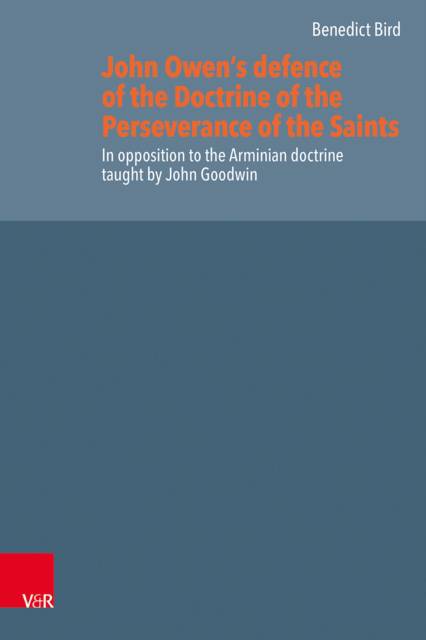
Benedict Bird offers a detailed examination of one John Owen's works which has not so far been the subject of a detailed published analysis. "The Doctrine of the Saints' Perseverance" (ital.) (1654) was described by Owen's nineteenth century biographer as "undeniably...the most masterly vindication of the [doctrine] in the English tongue." One reason why it has not received the attention that it deserved was because it needed to be read in conjunction with the similarly long and difficult work by John Goodwin, "Redemption Redeemed" (ital.) (1651) in reply to which Owen was writing.Owen was writing in reply to an Arminian who argued that either God must compel believers to persevere and in so doing become the author of their sin, or allow them freedom to apostatize. This, says Owen, is a false dichotomy. He brings together his biblical explanation of human free-will, and profound understanding of the inward working of the Spirit, to show how God infallibly keeps them to the end.Bird provides a full length historical and theological examination of both works, in which these major figures go head-to-head over a vital and pastorally important doctrine that is much debated and disputed by Christians whose theologies range from Reformed, to Arminian, to Lutheran, to Roman Catholic.