



Bedankt voor het vertrouwen het afgelopen jaar! Om jou te bedanken bieden we GRATIS verzending (in België) aan op alles gedurende de hele maand januari.
- Afhalen na 1 uur in een winkel met voorraad
- In januari gratis thuislevering in België
- Ruim aanbod met 7 miljoen producten
Bedankt voor het vertrouwen het afgelopen jaar! Om jou te bedanken bieden we GRATIS verzending (in België) aan op alles gedurende de hele maand januari.
- Afhalen na 1 uur in een winkel met voorraad
- In januari gratis thuislevering in België
- Ruim aanbod met 7 miljoen producten





Omschrijving
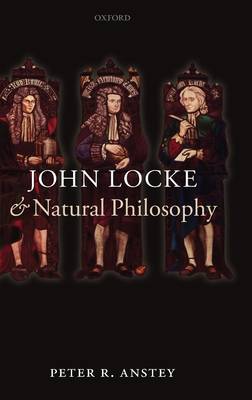
Peter Anstey presents a thorough and innovative study of John Locke's views on the method and content of natural philosophy. Focusing on Locke's Essay concerning Human Understanding, but also drawing extensively from his other writings and manuscript remains, Anstey argues that Locke was an advocate of the Experimental Philosophy: the new approach to natural philosophy championed by Robert Boyle and the early Royal Society who were opposed to speculative philosophy.
On the question of method, Anstey shows how Locke's pessimism about the prospects for a demonstrative science of nature led him, in the Essay, to promote Francis Bacon's method of natural history, and to downplay the value of hypotheses and analogical reasoning in science. But, according to Anstey, Locke never abandoned the ideal of a demonstrative natural philosophy, for he believed that if we could discover the primary qualities of the tiny corpuscles that constitute material bodies, we could then establish a kind of corpuscular metric that would allow us a genuine science of nature. It was only after the publication of the Essay, however, that Locke came to realize that Newton's Principia provided a model for the role of demonstrative reasoning in science based on principles established upon observation, and this led him to make significant revisions to his views in the 1690s.
On the content of Locke's natural philosophy, it is argued that even though Locke adhered to the Experimental Philosophy, he was not averse to speculation about the corpuscular nature of matter. Anstey takes us into new terrain and new interpretations of Locke's thought in his explorations of his mercurialist transmutational chymistry, his theory of generation by seminal principles, and his conventionalism about species.
On the question of method, Anstey shows how Locke's pessimism about the prospects for a demonstrative science of nature led him, in the Essay, to promote Francis Bacon's method of natural history, and to downplay the value of hypotheses and analogical reasoning in science. But, according to Anstey, Locke never abandoned the ideal of a demonstrative natural philosophy, for he believed that if we could discover the primary qualities of the tiny corpuscles that constitute material bodies, we could then establish a kind of corpuscular metric that would allow us a genuine science of nature. It was only after the publication of the Essay, however, that Locke came to realize that Newton's Principia provided a model for the role of demonstrative reasoning in science based on principles established upon observation, and this led him to make significant revisions to his views in the 1690s.
On the content of Locke's natural philosophy, it is argued that even though Locke adhered to the Experimental Philosophy, he was not averse to speculation about the corpuscular nature of matter. Anstey takes us into new terrain and new interpretations of Locke's thought in his explorations of his mercurialist transmutational chymistry, his theory of generation by seminal principles, and his conventionalism about species.
Specificaties
Betrokkenen
- Auteur(s):
- Uitgeverij:
Inhoud
- Aantal bladzijden:
- 266
- Taal:
- Engels
Eigenschappen
- Productcode (EAN):
- 9780199589777
- Verschijningsdatum:
- 19/05/2011
- Uitvoering:
- Hardcover
- Formaat:
- Ongenaaid / garenloos gebonden
- Afmetingen:
- 157 mm x 236 mm
- Gewicht:
- 521 g


Alleen bij Standaard Boekhandel
+ 354 punten op je klantenkaart van Standaard Boekhandel
SOLDEN


Beoordelingen
We publiceren alleen reviews die voldoen aan de voorwaarden voor reviews. Bekijk onze voorwaarden voor reviews.