



Je cadeautjes zeker op tijd in huis hebben voor de feestdagen? Kom langs in onze winkels en vind het perfecte geschenk!
- Afhalen na 1 uur in een winkel met voorraad
- Gratis thuislevering in België vanaf € 30
- Ruim aanbod met 7 miljoen producten
Je cadeautjes zeker op tijd in huis hebben voor de feestdagen? Kom langs in onze winkels en vind het perfecte geschenk!
- Afhalen na 1 uur in een winkel met voorraad
- Gratis thuislevering in België vanaf € 30
- Ruim aanbod met 7 miljoen producten





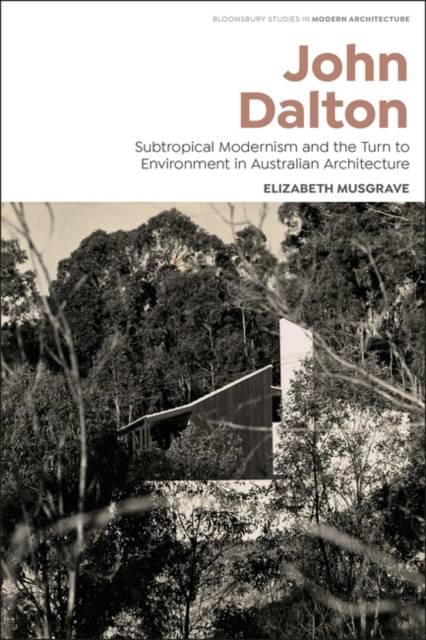
John Dalton
Subtropical Modernism and the Turn to Environment in Australian Architecture
Elizabeth Musgrave
€ 195,45
+ 390 punten
Omschrijving
This book addresses the work of architect John Dalton (1927-2007), an important voice in mid-century modernism in Australia whose work, despite his being exhibited and published internationally and also winning several awards for his designs, is woefully little known.
Published as part of the Bloomsbury Studies in Modern Architecture series, which brings to light the work of significant yet overlooked modernist architects, the book draws on previously unpublished archival documents, including Dalton's drawings and paintings, transcripts of lectures, letters and articles, plans and photographic images of built works, to characterize the architect not only as a very talented designer, but also as a pioneer of environmentalist thinking in Australia.
The book reveals how Dalton's architectural preoccupations parallel a transition in mid-century modern architecture globally from functional efficiency and material rationalism, to a concern with being in dialogue with the environment, confirming a wider 'environmental turn' that involved the integration of environmental with cultural considerations through relational thinking, and which preceded and transcends the discipline's fascination with theoretical paradigms such as Critical Regionalism.
John Dalton: Subtropical Modernism and the Turn to Environment in Australian Architecture is thus not only an important contribution to the existing scholarship on 20th century modernism, but also to the current renewed interest in environmental design across the globe.
Published as part of the Bloomsbury Studies in Modern Architecture series, which brings to light the work of significant yet overlooked modernist architects, the book draws on previously unpublished archival documents, including Dalton's drawings and paintings, transcripts of lectures, letters and articles, plans and photographic images of built works, to characterize the architect not only as a very talented designer, but also as a pioneer of environmentalist thinking in Australia.
The book reveals how Dalton's architectural preoccupations parallel a transition in mid-century modern architecture globally from functional efficiency and material rationalism, to a concern with being in dialogue with the environment, confirming a wider 'environmental turn' that involved the integration of environmental with cultural considerations through relational thinking, and which preceded and transcends the discipline's fascination with theoretical paradigms such as Critical Regionalism.
John Dalton: Subtropical Modernism and the Turn to Environment in Australian Architecture is thus not only an important contribution to the existing scholarship on 20th century modernism, but also to the current renewed interest in environmental design across the globe.
Specificaties
Betrokkenen
- Auteur(s):
- Uitgeverij:
Inhoud
- Aantal bladzijden:
- 240
- Taal:
- Engels
- Reeks:
Eigenschappen
- Productcode (EAN):
- 9781350291515
- Verschijningsdatum:
- 7/09/2023
- Uitvoering:
- Hardcover
- Formaat:
- Genaaid
- Afmetingen:
- 163 mm x 236 mm
- Gewicht:
- 598 g


Alleen bij Standaard Boekhandel
+ 390 punten op je klantenkaart van Standaard Boekhandel
CADEAU


Beoordelingen
We publiceren alleen reviews die voldoen aan de voorwaarden voor reviews. Bekijk onze voorwaarden voor reviews.