



Bedankt voor het vertrouwen het afgelopen jaar! Om jou te bedanken bieden we GRATIS verzending (in België) aan op alles gedurende de hele maand januari.
- Afhalen na 1 uur in een winkel met voorraad
- In januari gratis thuislevering in België
- Ruim aanbod met 7 miljoen producten
Bedankt voor het vertrouwen het afgelopen jaar! Om jou te bedanken bieden we GRATIS verzending (in België) aan op alles gedurende de hele maand januari.
- Afhalen na 1 uur in een winkel met voorraad
- In januari gratis thuislevering in België
- Ruim aanbod met 7 miljoen producten





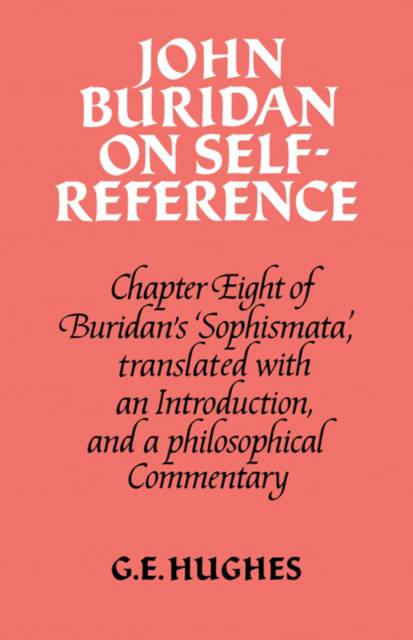
John Buridan on Self-Reference
Chapter Eight of Buridan's 'Sophismata', with a Translation, an Introduction, and a Philosophical Commentary
John Buridan
Paperback | Engels
€ 64,95
+ 129 punten
Omschrijving
John Buridan was a fourteenth-century philosopher who enjoyed an enormous reputation for about two hundred years, was then totally neglected, and is now being 'rediscovered' through his relevance to contemporary work in philosophical logic. The final chapter of Buridan's Sophismata deals with problems about self-reference, and in particular with the semantic paradoxes. He offers his own distinctive solution to the well-known 'Liar Paradox' and introduces a number of other paradoxes that will be unfamiliar to most logicians. Buridan also moves on from these problems to more general questions about the nature of propositions, the criteria of their truth and falsity and the concepts of validity and knowledge. This edition of that chapter is intended to make Buridan's ideas and arguments accessible to a wider range of readers. The volume should interest many philosophers, linguists and logicians, who are increasingly finding in medieval work striking anticipations of their own concerns.
Specificaties
Betrokkenen
- Auteur(s):
- Uitgeverij:
Inhoud
- Aantal bladzijden:
- 184
- Taal:
- Engels
Eigenschappen
- Productcode (EAN):
- 9780521288644
- Verschijningsdatum:
- 9/09/1982
- Uitvoering:
- Paperback
- Formaat:
- Trade paperback (VS)
- Afmetingen:
- 140 mm x 216 mm
- Gewicht:
- 240 g


Alleen bij Standaard Boekhandel
+ 129 punten op je klantenkaart van Standaard Boekhandel
SOLDEN


Beoordelingen
We publiceren alleen reviews die voldoen aan de voorwaarden voor reviews. Bekijk onze voorwaarden voor reviews.