



Bedankt voor het vertrouwen het afgelopen jaar! Om jou te bedanken bieden we GRATIS verzending (in België) aan op alles gedurende de hele maand januari.
- Afhalen na 1 uur in een winkel met voorraad
- In januari gratis thuislevering in België
- Ruim aanbod met 7 miljoen producten
Bedankt voor het vertrouwen het afgelopen jaar! Om jou te bedanken bieden we GRATIS verzending (in België) aan op alles gedurende de hele maand januari.
- Afhalen na 1 uur in een winkel met voorraad
- In januari gratis thuislevering in België
- Ruim aanbod met 7 miljoen producten





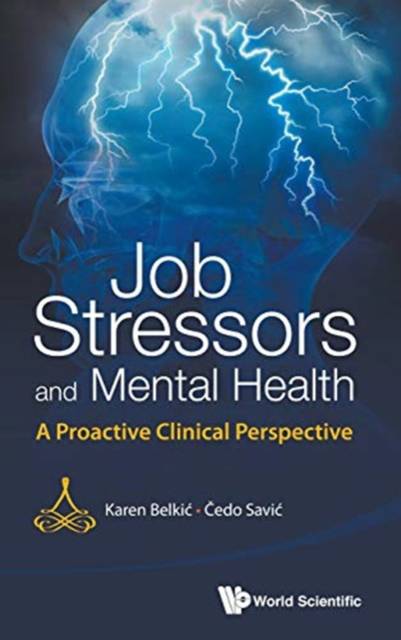
Job Stressors and Mental Health: A Proactive Clinical Perspective
Karen Belkic, Cedo Savic
Hardcover | Engels
€ 221,45
+ 442 punten
Omschrijving
The title of this book reflects the fundamental aim: to explore the relation between exposure to job stressors and mental health. This is done with the primary intention of developing a new clinical approach, one which takes a proactive stance, emphasizing the need for creating work conditions that are more in harmony with the needs of the human being. Pivotal to this endeavor is to provide an integrative and comprehensive methodology, for assessing work stressors and ameliorating them whenever possible. This methodology, the Occupational Stressor Index, the OSI, was developed by the authors, who have successfully applied the OSI over the years in the context of prevention-oriented clinical practice within neurology and psychiatry, as well as within cardiology, oncology and other medical disciplines. The OSI is grounded in cognitive ergonomics and brain research. The authors, as clinicians, have a special interest in and affinity with their colleagues, their fellow physicians. Consequently, the working conditions and mental health of physicians are strongly emphasized throughout the book. Gender considerations are also woven into the entire book.This book will be of value to readers at many levels and interests. It is written in such a way that a non-expert can learn a great deal about the topics. Readers at all levels can reflect on their own work situation and how it could be improved within the framework of enhanced mental health. For health professionals, particularly psychiatrists, occupational medicine specialists, clinical psychologists as well as physicians involved in primary care and rehabilitation, this book will represent a sorely-needed paradigm shift which will help them address a main source of their patients' mental distress. It will be thought-provoking and yet also practical. Part I of the book provides the multi-faceted, scientific justification for this new clinical approach. The authors, as clinicians themselves, speak the clinical language and guide the reader step-by-step as to how this approach can be applied in practice.
Specificaties
Betrokkenen
- Auteur(s):
- Uitgeverij:
Inhoud
- Aantal bladzijden:
- 404
- Taal:
- Engels
Eigenschappen
- Productcode (EAN):
- 9789814525558
- Verschijningsdatum:
- 1/11/2013
- Uitvoering:
- Hardcover
- Formaat:
- Genaaid
- Afmetingen:
- 157 mm x 231 mm
- Gewicht:
- 703 g


Alleen bij Standaard Boekhandel
+ 442 punten op je klantenkaart van Standaard Boekhandel
SOLDEN


Beoordelingen
We publiceren alleen reviews die voldoen aan de voorwaarden voor reviews. Bekijk onze voorwaarden voor reviews.