


- Afhalen na 1 uur in een winkel met voorraad
- Gratis thuislevering in België vanaf € 30
- Ruim aanbod met 7 miljoen producten
- Afhalen na 1 uur in een winkel met voorraad
- Gratis thuislevering in België vanaf € 30
- Ruim aanbod met 7 miljoen producten





€ 59,95
+ 119 punten
Omschrijving
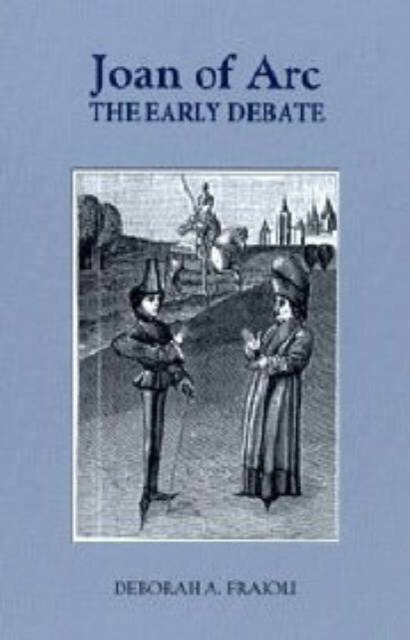
Joan of Arc arrived at the French court claiming to be sent by God to come to the aid of the dauphin Charles. Most studies of Joan focus on her political expediency, but the starting point of this book is her assertion that she was sent by God: it is the first real exploration of the application of the Catholic doctrine of 'discretio spirituum' (the discernment of spirits) to her case, and of her reception as a visionary woman. The author examines contemporary theological documents which show genuine debate about Joan's mission and whether she was diabolically or divinely inspired, also taking into account the two major literary works dealing with her, Christine de Pizan's 'Ditie de Jehanne d'Arc' and Martin Le Franc's 'Le champion des dames', as well as Joan's own letter to the English. Appendices offer translations of pertinent Latin and French texts. Professor DEBORAH FRAIOLI teaches in the Department of Foreign Languages and Literatures at Simmons College, Boston.
Specificaties
Betrokkenen
- Auteur(s):
- Uitgeverij:
Inhoud
- Aantal bladzijden:
- 248
- Taal:
- Engels
- Reeks:
Eigenschappen
- Productcode (EAN):
- 9780851158808
- Verschijningsdatum:
- 4/04/2002
- Uitvoering:
- Paperback
- Formaat:
- Trade paperback (VS)
- Afmetingen:
- 155 mm x 233 mm
- Gewicht:
- 408 g


Alleen bij Standaard Boekhandel
+ 119 punten op je klantenkaart van Standaard Boekhandel
Cadeau

AANGERADEN


Beoordelingen
We publiceren alleen reviews die voldoen aan de voorwaarden voor reviews. Bekijk onze voorwaarden voor reviews.