


- Afhalen na 1 uur in een winkel met voorraad
- Gratis thuislevering in België vanaf € 30
- Ruim aanbod met 7 miljoen producten
- Afhalen na 1 uur in een winkel met voorraad
- Gratis thuislevering in België vanaf € 30
- Ruim aanbod met 7 miljoen producten





€ 139,95
+ 279 punten
Omschrijving
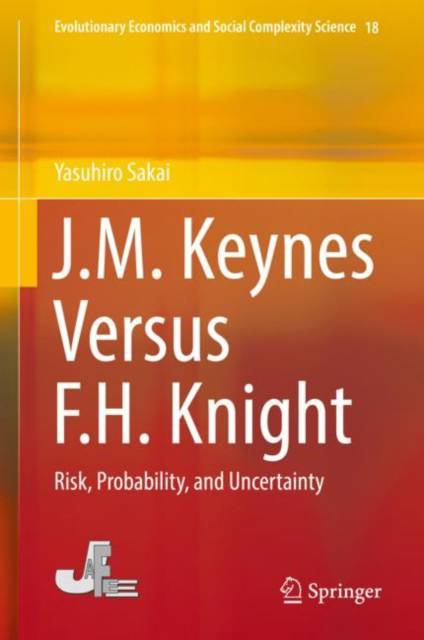
This book critically discusses and systematically compares J.M. Keynes and F. H. Knight, two giants in the history of economic thought. In 1921 they both published apparently similar books on risk, probability, and uncertainty. However, while Knight's contribution on risk and uncertainty is now well recognized, Keynes's work on probability and uncertainty has been somewhat ignored in the shadow of his more famous The General Theory of Employment, Interest and Money (1936). Focusing on an earlier yet equally important volume by Keynes, A Treatise on Probability (1921), this book sheds a light on his outstanding ideas and the lasting influence on his later works, including The General Theory. There are few books that systematically discuss Keynes and Knight, although there are remarkable comparisons between Keynes's concept of probability and uncertainty and Knight's distinction between a measurable risk and a non-measurable uncertainty. This timely book unifies Keynes and Knight into a new, comprehensive approach to a very complex human behavior
Specificaties
Betrokkenen
- Auteur(s):
- Uitgeverij:
Inhoud
- Aantal bladzijden:
- 157
- Taal:
- Engels
- Reeks:
- Reeksnummer:
- nr. 18
Eigenschappen
- Productcode (EAN):
- 9789811379994
- Verschijningsdatum:
- 10/07/2019
- Uitvoering:
- Hardcover
- Formaat:
- Genaaid
- Afmetingen:
- 156 mm x 234 mm
- Gewicht:
- 426 g


Alleen bij Standaard Boekhandel
+ 279 punten op je klantenkaart van Standaard Boekhandel
Cadeau

AANGERADEN


Beoordelingen
We publiceren alleen reviews die voldoen aan de voorwaarden voor reviews. Bekijk onze voorwaarden voor reviews.