


- Afhalen na 1 uur in een winkel met voorraad
- Gratis thuislevering in België vanaf € 30
- Ruim aanbod met 7 miljoen producten
- Afhalen na 1 uur in een winkel met voorraad
- Gratis thuislevering in België vanaf € 30
- Ruim aanbod met 7 miljoen producten





€ 43,45
+ 86 punten
Omschrijving
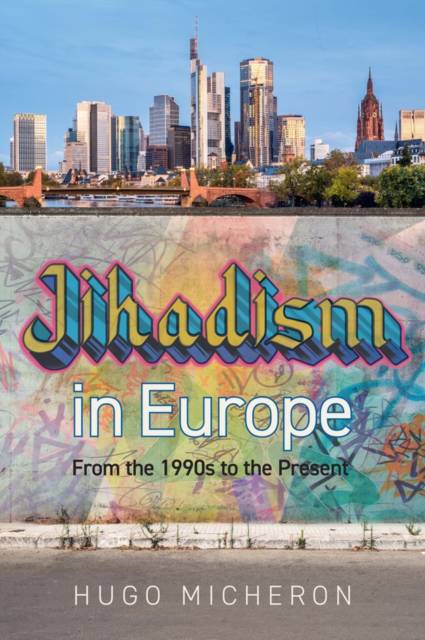
In this book, Hugo Micheron retraces the history of European Jihadism from the war in Afghanistan in the 1990s to the present day. Over a period of some thirty years, Jihadist ideas spread to the main cities of Europe, where they were disseminated by thousands of Islamic activists. These ideas were also embedded in online media which connect Islamic communities across the world.
Micheron argues that the development of Jihadism has not been linear: it has followed a sinusoidal path marked by ebbs and flows. At high tide, the movement is visible and its sympathizers give priority to armed jihad. They seek to mediatize their operations in order to galvanize sympathizers, draw in new recruits and intimidate adversaries. These periods of high tide are the times when they most often employ terrorism. At low tide, jihadism seems to have been defeated. Organizations are dismantled and they no longer have the operational capacity to conduct large-scale attacks. To the external observer, armed jihad seems to have disappeared, and its threat is correspondingly weakened. But jihadism has not disappeared: it has merely mutated. Armed struggle has been replaced by ideological struggle. This wave-like movement of jihadism is poorly understood in the West. Observers tend to measure the threat only in terms of overt terrorist attacks and they ignore the mutations that occur during the periods of low tide, and hence they fail to appreciate the reconfigurations of jihadism that take place over the long term.
Based on archival research as well as numerous interviews, Micheron provides the first full history of European jihadism. He shows that jihadism has ebbed and flowed in Europe with astonishing regularity, at a rate of one complete cycle per decade. It originated in the war in Afghanistan in the 1980s, put down roots in Europe in the 1990s, spread throughout the continent after September 11, 2001, and expanded to new horizons with the emergence of Islamic State in Iraq and then Syria, where it changed scale. In the post-IS period, it underwent new phases of mutation, in prisons and within European societies, which makes it all the more urgent to understand this broad movement today.
Unrivalled in the breadth and depth of its coverage, this book will be of great interest to anyone concerned about the threats faced by Western democracies today, as well as students and scholars of political science, IR, terrorism and extremism.
Micheron argues that the development of Jihadism has not been linear: it has followed a sinusoidal path marked by ebbs and flows. At high tide, the movement is visible and its sympathizers give priority to armed jihad. They seek to mediatize their operations in order to galvanize sympathizers, draw in new recruits and intimidate adversaries. These periods of high tide are the times when they most often employ terrorism. At low tide, jihadism seems to have been defeated. Organizations are dismantled and they no longer have the operational capacity to conduct large-scale attacks. To the external observer, armed jihad seems to have disappeared, and its threat is correspondingly weakened. But jihadism has not disappeared: it has merely mutated. Armed struggle has been replaced by ideological struggle. This wave-like movement of jihadism is poorly understood in the West. Observers tend to measure the threat only in terms of overt terrorist attacks and they ignore the mutations that occur during the periods of low tide, and hence they fail to appreciate the reconfigurations of jihadism that take place over the long term.
Based on archival research as well as numerous interviews, Micheron provides the first full history of European jihadism. He shows that jihadism has ebbed and flowed in Europe with astonishing regularity, at a rate of one complete cycle per decade. It originated in the war in Afghanistan in the 1980s, put down roots in Europe in the 1990s, spread throughout the continent after September 11, 2001, and expanded to new horizons with the emergence of Islamic State in Iraq and then Syria, where it changed scale. In the post-IS period, it underwent new phases of mutation, in prisons and within European societies, which makes it all the more urgent to understand this broad movement today.
Unrivalled in the breadth and depth of its coverage, this book will be of great interest to anyone concerned about the threats faced by Western democracies today, as well as students and scholars of political science, IR, terrorism and extremism.
Specificaties
Betrokkenen
- Auteur(s):
- Vertaler(s):
- Uitgeverij:
Inhoud
- Aantal bladzijden:
- 288
- Taal:
- Engels
Eigenschappen
- Productcode (EAN):
- 9781509566112
- Verschijningsdatum:
- 1/09/2026
- Uitvoering:
- Hardcover
- Formaat:
- Genaaid


Alleen bij Standaard Boekhandel
+ 86 punten op je klantenkaart van Standaard Boekhandel
Cadeau

AANGERADEN


Beoordelingen
We publiceren alleen reviews die voldoen aan de voorwaarden voor reviews. Bekijk onze voorwaarden voor reviews.