


- Afhalen na 1 uur in een winkel met voorraad
- Gratis thuislevering in België vanaf € 30
- Ruim aanbod met 7 miljoen producten
- Afhalen na 1 uur in een winkel met voorraad
- Gratis thuislevering in België vanaf € 30
- Ruim aanbod met 7 miljoen producten





€ 156,95
+ 313 punten
Omschrijving
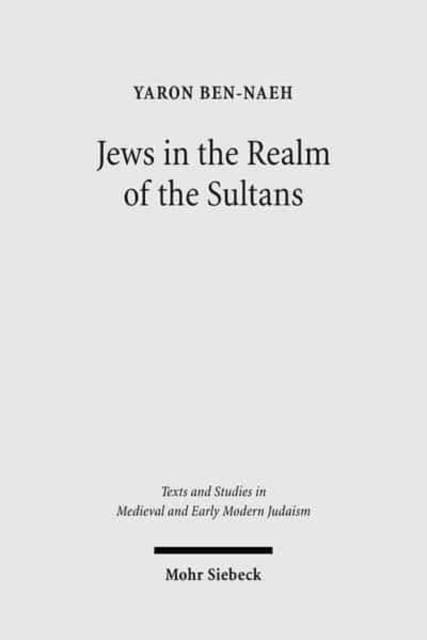
Jewish society in the Ottoman Empire has not been the subject of systematic research. The seventeenth century is the main object of this study, since it was a formative era. For Ottoman Jews, the 'Ottoman century' constituted an era of gradual acculturation to changing reality, parallel to the changing character of the Ottoman state. Continuous changes and developments shaped anew the character of this Jewry, the core of what would later become known as 'Sephardi Jewry'.Yaron Ben-Naeh draws from primary and secondary Hebrew, Ottoman, and European sources, the image of Jewish society in the Ottoman Empire. In the chapters he leads the reader from the overall urban framework to individual aspects. Beginning with the physical environment, he moves on to discuss their relationships with the majority society, followed by a description and analysis of the congregation, its organization and structure, and from there to the character of Ottoman Jewish society and its nuclear cell - the family. Special emphasis is placed throughout the work on the interaction with Muslim society and the resulting acculturation that affected all aspects and all levels of Jewish life in the Empire. In this, the author challenges the widespread view that sees this community as being stagnant and self-segregated, as well as the accepted concept of a traditional Jewish society under Islam.
Specificaties
Betrokkenen
- Auteur(s):
- Uitgeverij:
Inhoud
- Aantal bladzijden:
- 503
- Taal:
- Engels
- Reeks:
- Reeksnummer:
- nr. 22
Eigenschappen
- Productcode (EAN):
- 9783161495236
- Verschijningsdatum:
- 31/12/2008
- Uitvoering:
- Hardcover
- Formaat:
- Genaaid
- Afmetingen:
- 153 mm x 229 mm
- Gewicht:
- 906 g


Alleen bij Standaard Boekhandel
+ 313 punten op je klantenkaart van Standaard Boekhandel
Cadeau

AANGERADEN


Beoordelingen
We publiceren alleen reviews die voldoen aan de voorwaarden voor reviews. Bekijk onze voorwaarden voor reviews.