


- Afhalen na 1 uur in een winkel met voorraad
- Gratis thuislevering in België vanaf € 30
- Ruim aanbod met 7 miljoen producten
- Afhalen na 1 uur in een winkel met voorraad
- Gratis thuislevering in België vanaf € 30
- Ruim aanbod met 7 miljoen producten





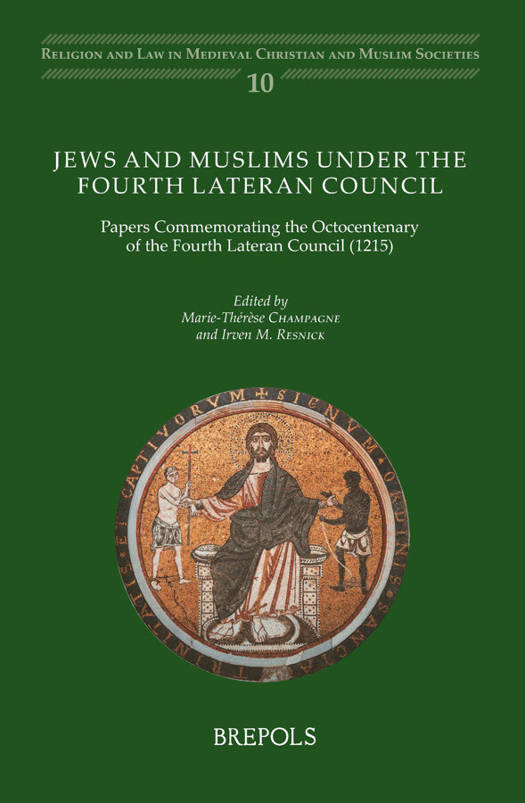
Jews and Muslims Under the Fourth Lateran Council
Papers Commemorating the Octocentenary of the Fourth Lateran Council (1215)
Marie-Thérèse Champagne
€ 90,10
+ 180 punten
Omschrijving
The Fourth Lateran Council (1215) was groundbreaking for having introduced to medieval Europe a series of canons that sought to regulate encounters between Christians and Jews and Muslims. Its canon 68 demanded that Jews and Muslims wear distinguishing dress, in order to prevent Christians from entering into illicit sexual relations with them, restricted the movement of Jews in public spaces during Holy Week, and exhorted secular authorities to punish Jews who in any way insult or blaspheme against Christ himself. Other canons sought to exercise greater control over moneylending, to provide relief to Christian borrowers, to extract tithes from Jews who held Christian properties as pledges, and prohibited Jews from exercising power as public officials over Christians. The canons condemned converts who preserved elements from their former religion, promoted a fifth Crusade to the East, exempted Crusaders from taxes and from interest payments to Jewish moneylenders, restricted trade with Muslims or Saracens, and condemned Christians who provided arms or assistance to Saracens. The Council's canons affected the missionary efforts of the late medieval Church and its attempts to convert Jewish and Muslim minorities, and established essential guidance on minority relations not to be surpassed until Vatican II in the 1960s.
Specificaties
Betrokkenen
- Auteur(s):
- Uitgeverij:
Inhoud
- Aantal bladzijden:
- 280
- Taal:
- Engels
- Reeks:
- Reeksnummer:
- nr. 10
Eigenschappen
- Productcode (EAN):
- 9782503581514
- Verschijningsdatum:
- 6/06/2019
- Uitvoering:
- Hardcover
- Formaat:
- Genaaid
- Afmetingen:
- 163 mm x 239 mm
- Gewicht:
- 612 g


Alleen bij Standaard Boekhandel
+ 180 punten op je klantenkaart van Standaard Boekhandel
Cadeau

AANGERADEN


Beoordelingen
We publiceren alleen reviews die voldoen aan de voorwaarden voor reviews. Bekijk onze voorwaarden voor reviews.