


- Afhalen na 1 uur in een winkel met voorraad
- Gratis thuislevering in België vanaf € 30
- Ruim aanbod met 7 miljoen producten
- Afhalen na 1 uur in een winkel met voorraad
- Gratis thuislevering in België vanaf € 30
- Ruim aanbod met 7 miljoen producten





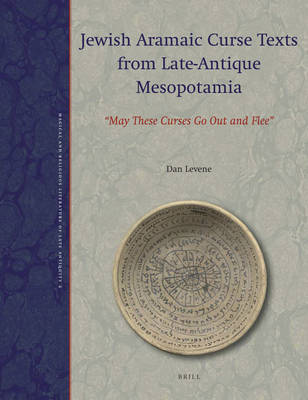
Jewish Aramaic Curse Texts from Late-Antique Mesopotamia
"May These Curses Go Out and Flee"
Dan Levene
€ 209,45
+ 418 punten
Omschrijving
The corpus of Aramaic incantation bowls from Sasanian Mesopotamia is perhaps the most important source we have for studying the everyday beliefs and practices of the Jewish, Christian, Mandaean, Manichaean, Zoroastrian and Pagan communities on the eve of the Islamic conquests. In Jewish Aramaic Curse Texts from Late-Antique Mesopotamia, Dan Levene collects and analyses a selection of Jewish Babylonian Aramaic incantation bowls. While such texts are usually apotropaic or healing in purpose, those collected here are distinctive in that their purpose was to curse or return curses against human adversaries. This book presents new editions of thirty texts, of which fourteen are edited here for the first time, with an introduction, commentary, analysis and glossaries, as well as photographs.
"In this valuable addition to the literature on the role of bowls with aggressive texts in magic practices in this period, Levene (Jewish history and culture, U. of Southampton, UK) presents a summary of newly edited and already published bowls with Aramaic transcription; English translation; its type (e.g., invocation of demons to attack a named person, counter-charm); publication source; formulaic parallels in other texts; and notes." Reference & Research Book News, 2013.
"In this valuable addition to the literature on the role of bowls with aggressive texts in magic practices in this period, Levene (Jewish history and culture, U. of Southampton, UK) presents a summary of newly edited and already published bowls with Aramaic transcription; English translation; its type (e.g., invocation of demons to attack a named person, counter-charm); publication source; formulaic parallels in other texts; and notes." Reference & Research Book News, 2013.
Specificaties
Betrokkenen
- Auteur(s):
- Uitgeverij:
Inhoud
- Aantal bladzijden:
- 180
- Taal:
- Engels
- Reeks:
- Reeksnummer:
- nr. 2
Eigenschappen
- Productcode (EAN):
- 9789004250925
- Verschijningsdatum:
- 23/08/2013
- Uitvoering:
- Hardcover
- Formaat:
- Genaaid
- Afmetingen:
- 221 mm x 284 mm
- Gewicht:
- 771 g


Alleen bij Standaard Boekhandel
+ 418 punten op je klantenkaart van Standaard Boekhandel
CADEAU


Beoordelingen
We publiceren alleen reviews die voldoen aan de voorwaarden voor reviews. Bekijk onze voorwaarden voor reviews.