


- Afhalen na 1 uur in een winkel met voorraad
- Gratis thuislevering in België vanaf € 30
- Ruim aanbod met 7 miljoen producten
- Afhalen na 1 uur in een winkel met voorraad
- Gratis thuislevering in België vanaf € 30
- Ruim aanbod met 7 miljoen producten





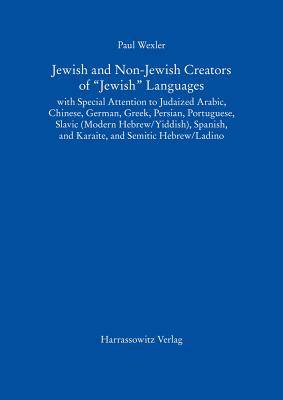
Jewish and Non-Jewish Creators of 'Jewish' Languages
With Special Attention to Judaized Arabic, Chinese, German, Greek, Persian, Portuguese, Slavic (Modern Hebrew/Yiddish), Spanish, and Karaite, and Semitic Hebrew/Ladino. a Collection of Reprinted Articles from Across Four Decades with a Reassessment
Paul Wexler
Hardcover | Engels
€ 328,95
+ 657 punten
Omschrijving
The present volume brings together 34 articles that were published between 1964 and 2003 on Judaized forms of Arabic, Chinese, German, Greek, Persian, Portuguese, Slavic (including Modern Hebrew and Yiddish, two Slavic languages "relexified" to Hebrew and German, respectively), Spanish and Semitic Hebrew (including Ladino - the Ibero-Romance relexification of Biblical Hebrew) and Karaite. The motivations for reissuing these articles are the convenience of having thematically similar topics appear together in the same venue and the need to update the interpretations, many of which have radically changed over the years. As explained in a lengthy new preface and in notes added to the articles themselves, the impetus to create strikingly unique Jewish ethnolects comes not so much from the creativity of the Jews but rather from non- Jewish converts to Judaism, in search (often via relexification) of a unique linguistic analogue to their new ethnoreligious identity. The volume should be of interest to students of relexification, of the Judaization of non-Jewish languages, and of these specific languages.
Specificaties
Betrokkenen
- Auteur(s):
- Uitgeverij:
Inhoud
- Aantal bladzijden:
- 909
- Taal:
- Engels
Eigenschappen
- Productcode (EAN):
- 9783447054041
- Verschijningsdatum:
- 1/11/2006
- Uitvoering:
- Hardcover
- Formaat:
- Genaaid
- Afmetingen:
- 183 mm x 244 mm
- Gewicht:
- 1678 g


Alleen bij Standaard Boekhandel
+ 657 punten op je klantenkaart van Standaard Boekhandel

Beoordelingen
We publiceren alleen reviews die voldoen aan de voorwaarden voor reviews. Bekijk onze voorwaarden voor reviews.