


- Afhalen na 1 uur in een winkel met voorraad
- Gratis thuislevering in België vanaf € 30
- Ruim aanbod met 7 miljoen producten
- Afhalen na 1 uur in een winkel met voorraad
- Gratis thuislevering in België vanaf € 30
- Ruim aanbod met 7 miljoen producten





€ 67,95
+ 135 punten
Uitvoering
Omschrijving
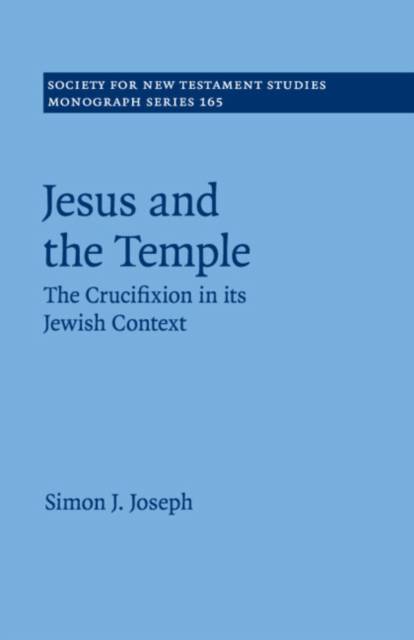
Most Jesus specialists agree that the Temple incident led directly to Jesus' arrest, but the precise relationship between Jesus and the Temple's administration remains unclear. Jesus and the Temple examines this relationship, exploring the reinterpretation of Torah observance and traditional Temple practices that are widely considered central components of the early Jesus movement. Challenging a growing tendency in contemporary scholarship to assume that the earliest Christians had an almost uniformly positive view of the Temple's sacrificial system, Simon J. Joseph addresses the ambiguous, inconsistent, and contradictory views on sacrifice and the Temple in the New Testament. This volume fills a significant gap in the literature on sacrifice in Jewish Christianity. It introduces a new hypothesis positing Jesus' enactment of a program of radically nonviolent eschatological restoration, an orientation that produced Jesus' conflicts with his contemporaries and inspired the first attributions of sacrificial language to his death.
Specificaties
Betrokkenen
- Auteur(s):
- Uitgeverij:
Inhoud
- Aantal bladzijden:
- 342
- Taal:
- Engels
- Reeks:
- Reeksnummer:
- nr. 165
Eigenschappen
- Productcode (EAN):
- 9781107563513
- Verschijningsdatum:
- 11/07/2018
- Uitvoering:
- Paperback
- Formaat:
- Trade paperback (VS)
- Afmetingen:
- 140 mm x 216 mm
- Gewicht:
- 394 g


Alleen bij Standaard Boekhandel
+ 135 punten op je klantenkaart van Standaard Boekhandel
Cadeau

AANGERADEN


Beoordelingen
We publiceren alleen reviews die voldoen aan de voorwaarden voor reviews. Bekijk onze voorwaarden voor reviews.