


- Afhalen na 1 uur in een winkel met voorraad
- Gratis thuislevering in België vanaf € 30
- Ruim aanbod met 7 miljoen producten
- Afhalen na 1 uur in een winkel met voorraad
- Gratis thuislevering in België vanaf € 30
- Ruim aanbod met 7 miljoen producten





Omschrijving
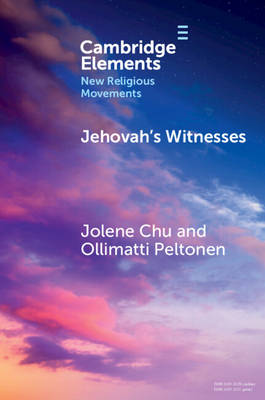
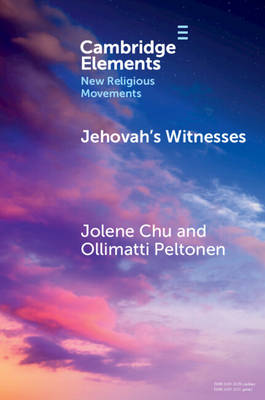
Jehovah's Witnesses began as an informal Bible study group in the 1870s that sought to recover first-century Christian beliefs and practices. They disseminated literature announcing the expected reign of God's Kingdom and called themselves Bible Students. In 1931, they adopted the name Jehovah's Witnesses, epitomizing their belief in the Christian obligation to preach the gospel worldwide. Known for their ethic of nonviolence and their evangelizing work, and despite worshipping freely in most countries, Witnesses are subject to controversy, particularly vis-à-vis mainstream Christianity, the State, and secularized societies. The authors are practicing Jehovah's Witnesses who present this work as neither apologia nor official account, but as an emic description of the history, beliefs, identity, and organizational structure of Witnesses, and their societal interactions. While briefly covering main controversies, this Element focuses on the culture and lived experience of the millions comprising the Witness community. This title is also available as Open Access on Cambridge Core.
Specificaties
Betrokkenen
- Auteur(s):
- Uitgeverij:
Inhoud
- Aantal bladzijden:
- 94
- Taal:
- Engels
- Reeks:
Eigenschappen
- Productcode (EAN):
- 9781009375184
- Verschijningsdatum:
- 30/01/2025
- Uitvoering:
- Paperback
- Formaat:
- Trade paperback (VS)
- Afmetingen:
- 152 mm x 229 mm
- Gewicht:
- 136 g


Alleen bij Standaard Boekhandel
+ 72 punten op je klantenkaart van Standaard Boekhandel
Cadeau

AANGERADEN


Beoordelingen
We publiceren alleen reviews die voldoen aan de voorwaarden voor reviews. Bekijk onze voorwaarden voor reviews.