


- Afhalen na 1 uur in een winkel met voorraad
- Gratis thuislevering in België vanaf € 30
- Ruim aanbod met 7 miljoen producten
- Afhalen na 1 uur in een winkel met voorraad
- Gratis thuislevering in België vanaf € 30
- Ruim aanbod met 7 miljoen producten





Omschrijving
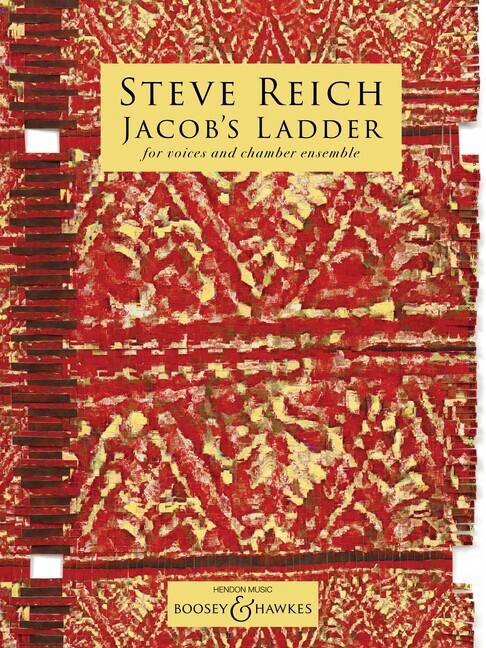
(Boosey & Hawkes Scores/Books). Jacob's Ladder cries out for commentary. The imagery is compelling yet wide open. William Blake drew it as a winding staircase; you can see ladders all over Bruegel's "Tower of Babel." There are mysterious ladders in late Phillip Guston paintings. There are all kinds of interpretations of ladders. Powerful images originate from everyday objects and radiate out to infinity. When I first approached writing the piece, it seemed that the most obvious musical analogue to a ladder was a scale. (Incidentally, the word 'Sulahm' in Hebrew is used for both 'ladder' and 'scale.') What followed was a lot of wasted time trying to rewrite Hanon and other exercise books. I finally realized, any melodic movement - up, down, or held - can find its analogy on a ladder. Sometimes one only goes up a few rungs to reach something and then descends, or perhaps climbs higher, pauses, and then descends pausing at each rung on the way down. That got me out of the trap of thinking only in terms of scales, and into a frame of mind where everything I composed was totally intuitive, yet still a connection between heaven and earth. There are four short sections - exposition, if you like - on each of the four lines of text I mentioned and then four longer sections elaborating on and developing those first four. What's particularly interesting to me in these much longer sections is that they are mostly instrumental music. The instrumental music interprets the movement of messenger/angels going up, down, or pausing on a ladder (or ladders) between heaven and earth; a musical interpretation without words. Probably as a result of thinking of the 'notes as messengers, ' I ended up with a little more than half the music purely instrumental. The voices return at length, however, in the final section. The constant 16th-note pulse slows to eighths and finally to quarters as the voices and instruments broaden out to a still, held point at the end. -Steve Reich, 2023
Specificaties
Betrokkenen
- Uitgeverij:
Inhoud
- Aantal bladzijden:
- 100
- Taal:
- Engels
Eigenschappen
- Productcode (EAN):
- 9798350132519
- Verschijningsdatum:
- 1/05/2025
- Uitvoering:
- Paperback
- Formaat:
- Trade paperback (VS)
- Afmetingen:
- 229 mm x 305 mm
- Gewicht:
- 385 g

Alleen bij Standaard Boekhandel
+ 83 punten op je klantenkaart van Standaard Boekhandel
Cadeau

AANGERADEN


Beoordelingen
We publiceren alleen reviews die voldoen aan de voorwaarden voor reviews. Bekijk onze voorwaarden voor reviews.