


- Afhalen na 1 uur in een winkel met voorraad
- Gratis thuislevering in België vanaf € 30
- Ruim aanbod met 7 miljoen producten
- Afhalen na 1 uur in een winkel met voorraad
- Gratis thuislevering in België vanaf € 30
- Ruim aanbod met 7 miljoen producten





Omschrijving
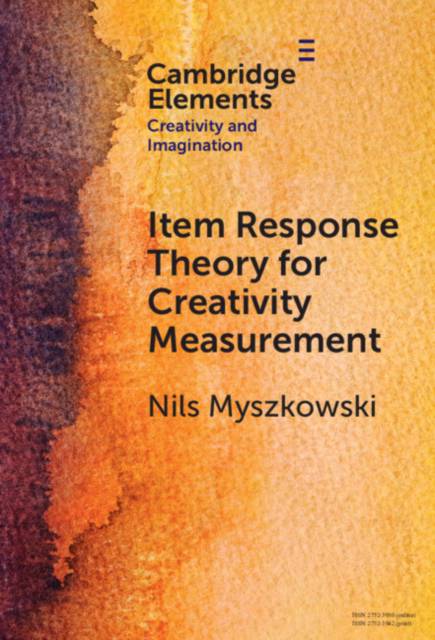
Item-response theory (IRT) represents a key advance in measurement theory. Yet, it is largely absent from curricula, textbooks and popular statistical software, and often introduced through a subset of models. This Element, intended for creativity and innovation researchers, researchers-in-training, and anyone interested in how individual creativity might be measured, aims to provide 1) an overview of classical test theory (CTT) and its shortcomings in creativity measurement situations (e.g., fluency scores, consensual assessment technique, etc.); 2) an introduction to IRT and its core concepts, using a broad view of IRT that notably sees CTT models as particular cases of IRT; 3) a practical strategic approach to IRT modeling; 4) example applications of this strategy from creativity research and the associated advantages; and 5) ideas for future work that could advance how IRT could better benefit creativity research, as well as connections with other popular frameworks.
Specificaties
Betrokkenen
- Auteur(s):
- Uitgeverij:
Inhoud
- Aantal bladzijden:
- 102
- Taal:
- Engels
- Reeks:
Eigenschappen
- Productcode (EAN):
- 9781009475815
- Verschijningsdatum:
- 14/03/2024
- Uitvoering:
- Hardcover
- Formaat:
- Genaaid
- Afmetingen:
- 152 mm x 229 mm
- Gewicht:
- 308 g


Alleen bij Standaard Boekhandel
+ 248 punten op je klantenkaart van Standaard Boekhandel
Cadeau

AANGERADEN


Beoordelingen
We publiceren alleen reviews die voldoen aan de voorwaarden voor reviews. Bekijk onze voorwaarden voor reviews.