


- Afhalen na 1 uur in een winkel met voorraad
- Gratis thuislevering in België vanaf € 30
- Ruim aanbod met 7 miljoen producten
- Afhalen na 1 uur in een winkel met voorraad
- Gratis thuislevering in België vanaf € 30
- Ruim aanbod met 7 miljoen producten





€ 19,45
+ 38 punten
Omschrijving
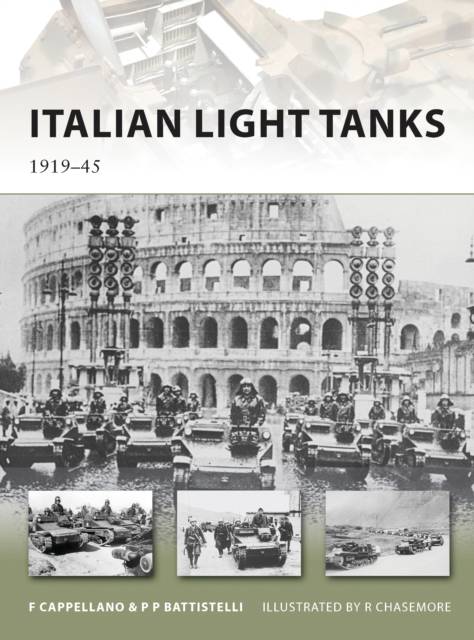
The Italian army, unlike those of the British and French, did not use tanks in combat during World War I and, by November 1918, only one training unit equipped with French Schneider and Renault tanks had been formed. Consequently, during the 1920s the Italian army had just one single tank type in its armored inventory--the Fiat 3000. Only in 1927 was the first tank unit formed as a branch of the infantry and not as an independent organization, while the cavalry rejected the idea of both tanks and armored cars and decided to stand by the use of horses for its mounted units. Between 1933 and March 1939, a further 2,724 CV 33 / L 3 tanks were built, 1,216 of which were exported all over the world. By the time Italy entered the war in June 1940, the army had 1,284 light tanks, 855 of which were in combat units, including three armored divisions. Variants of the CV 33 / L 3 tanks included flame-throwers, bridge-layers, recovery vehicles, and a radio command tank. Some L 3 tanks were still in use in 1945, by both the Germans and the German-allied Italian units of the Repubblica Sociale.
Specificaties
Betrokkenen
- Auteur(s):
- Illustrator(s):
- Uitgeverij:
Inhoud
- Aantal bladzijden:
- 48
- Taal:
- Engels
- Reeks:
- Reeksnummer:
- nr. 191
Eigenschappen
- Productcode (EAN):
- 9781849087773
- Verschijningsdatum:
- 19/06/2012
- Uitvoering:
- Paperback
- Formaat:
- Trade paperback (VS)
- Afmetingen:
- 180 mm x 244 mm
- Gewicht:
- 158 g


Alleen bij Standaard Boekhandel
+ 38 punten op je klantenkaart van Standaard Boekhandel
Cadeau

AANGERADEN


Beoordelingen
We publiceren alleen reviews die voldoen aan de voorwaarden voor reviews. Bekijk onze voorwaarden voor reviews.