


- Afhalen na 1 uur in een winkel met voorraad
- Gratis thuislevering in België vanaf € 30
- Ruim aanbod met 7 miljoen producten
- Afhalen na 1 uur in een winkel met voorraad
- Gratis thuislevering in België vanaf € 30
- Ruim aanbod met 7 miljoen producten





€ 13,95
+ 27 punten
Omschrijving
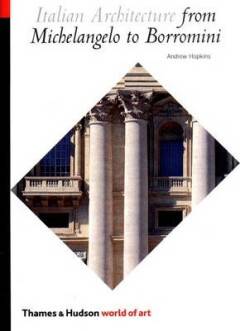
The years from 1520 to 1630 were crucial in the development of Western architecture, but to label as Mannerist the transition from Michelangelo's "licentious" New Sacristy in Florence to Borromini's innovative S. Carlo alle Quattro Fontane is coming to seem unduly simplistic. In this carefully researched and original study, Andrew Hopkins examines the century's changing functional demands, the political forces, the patronage system, and local traditions. Exploring a wide range of Italian buildings (including those outside the major urban centers), he introduces us to dozens of neglected architects whose works will come as a revelation. By 1630, architecture had taken on a new dynamism that would soon conquer Italy, Europe, and the New World: the baroque. 209 b/w illustrations.
Specificaties
Betrokkenen
- Auteur(s):
- Uitgeverij:
Inhoud
- Aantal bladzijden:
- 223
- Taal:
- Engels
- Reeks:
Eigenschappen
- Productcode (EAN):
- 9780500203613
- Verschijningsdatum:
- 17/09/2002
- Uitvoering:
- Paperback
- Formaat:
- Trade paperback (VS)
- Afmetingen:
- 162 mm x 214 mm
- Gewicht:
- 444 g


Alleen bij Standaard Boekhandel
+ 27 punten op je klantenkaart van Standaard Boekhandel
Cadeau

AANGERADEN


Beoordelingen
We publiceren alleen reviews die voldoen aan de voorwaarden voor reviews. Bekijk onze voorwaarden voor reviews.