


- Afhalen na 1 uur in een winkel met voorraad
- Gratis thuislevering in België vanaf € 30
- Ruim aanbod met 7 miljoen producten
- Afhalen na 1 uur in een winkel met voorraad
- Gratis thuislevering in België vanaf € 30
- Ruim aanbod met 7 miljoen producten





€ 124,45
+ 248 punten
Uitvoering
Omschrijving
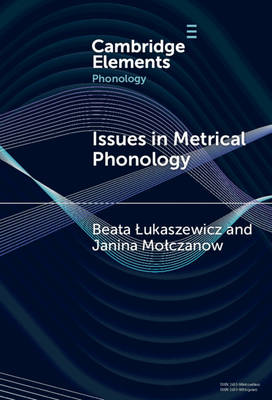
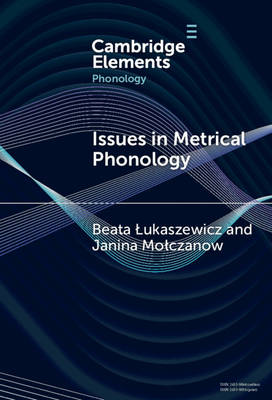
Metrical systems differ in patterns of stress assignment, the domains over which those patterns are built, and acoustic manifestations of stress. It has been widely debated in the phonological/phonetic literature how stress should be represented, what mechanisms govern its assignment, and whether the phonetic underpinnings of primary/secondary stress exist independently of other prominence effects (e.g. boundary strengthening, pitch accents). This Element addresses these fundamental issues on the basis of an in-depth study of a hybrid (lexical-grammatical) metrical system of Ukrainian. It synthesizes previous results with new findings, focusing on the phonetic as well as formal description of the Ukrainian system. The lexical-grammatical stress interactions in Ukrainian pose a challenge for current metrical theories, shed light on the relation between the lexical and grammatical stress domains, and the relationship between categorical and gradient aspects of the metrical system. This title is also available as Open Access on Cambridge Core.
Specificaties
Betrokkenen
- Auteur(s):
- Uitgeverij:
Inhoud
- Aantal bladzijden:
- 74
- Taal:
- Engels
- Reeks:
Eigenschappen
- Productcode (EAN):
- 9781009517454
- Verschijningsdatum:
- 27/02/2025
- Uitvoering:
- Hardcover
- Formaat:
- Genaaid
- Afmetingen:
- 152 mm x 229 mm
- Gewicht:
- 272 g


Alleen bij Standaard Boekhandel
+ 248 punten op je klantenkaart van Standaard Boekhandel
Cadeau

AANGERADEN


Beoordelingen
We publiceren alleen reviews die voldoen aan de voorwaarden voor reviews. Bekijk onze voorwaarden voor reviews.