


- Afhalen na 1 uur in een winkel met voorraad
- Gratis thuislevering in België vanaf € 30
- Ruim aanbod met 7 miljoen producten
- Afhalen na 1 uur in een winkel met voorraad
- Gratis thuislevering in België vanaf € 30
- Ruim aanbod met 7 miljoen producten





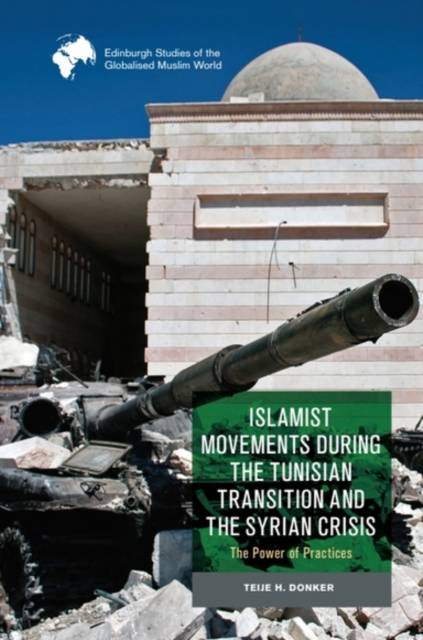
Islamist Movements During the Tunisian Transition and Syrian Crisis
The Power of Practices
Teije H Donker
€ 48,45
+ 96 punten
Uitvoering
Omschrijving
Islamism haunted post-2011 movements for democratisation in the Arab world. Political liberalisations opened space for Islamist movements - from the Muslim Brotherhood and Salafist to Jihadists and the Islamic State - and seemed to threaten the liberal character of reforms. Going against this popular perception of Islamism as defined by an illiberal ideology, this book provides a ground breaking analysis of the concrete practices of Islamist movements to assess their impact on post-2011 activism. It traces the establishment of Islamic schools, charity organisations, courts and political parties; articulations of Islamic collective identities, enforcement of public norms and provision of public services during the Tunisian transition and the Syrian crisis (2011-2021). Teije H. Donker argues that Islamists are caught in an enduring struggle to define their own impact by rendering religion distinct among the practices that make up social and political conflict. This results in a phenomenon that defies easy categorisations and morphs with social and political developments in the region.
Specificaties
Betrokkenen
- Auteur(s):
- Uitgeverij:
Inhoud
- Aantal bladzijden:
- 296
- Taal:
- Engels
- Reeks:
Eigenschappen
- Productcode (EAN):
- 9781399506199
- Verschijningsdatum:
- 31/12/2025
- Uitvoering:
- Paperback
- Formaat:
- Trade paperback (VS)
- Afmetingen:
- 156 mm x 234 mm
- Gewicht:
- 421 g



Alleen bij Standaard Boekhandel
+ 96 punten op je klantenkaart van Standaard Boekhandel
Cadeau

AANGERADEN


Beoordelingen
We publiceren alleen reviews die voldoen aan de voorwaarden voor reviews. Bekijk onze voorwaarden voor reviews.