


- Afhalen na 1 uur in een winkel met voorraad
- Gratis thuislevering in België vanaf € 30
- Ruim aanbod met 7 miljoen producten
- Afhalen na 1 uur in een winkel met voorraad
- Gratis thuislevering in België vanaf € 30
- Ruim aanbod met 7 miljoen producten





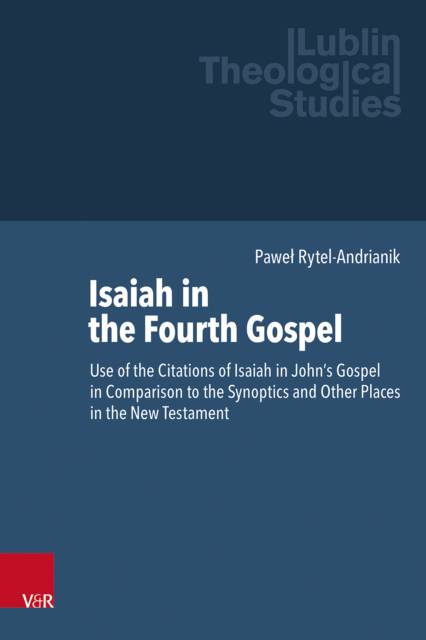
Isaiah in the Fourth Gospel
Use of the Citations of Isaiah in John's Gospel in Comparison to the Synoptics and Other Places in the New Testament
Pawel Rytel-Andrianik
€ 98,95
+ 197 punten
Omschrijving
In this study Pawel Rytel-Andrianik focuses on the meaning and function of Isaianic citations in both their original and new contexts. He offers a linguistic analyses of each of the citations in order to identify the source of the citation and understand the editorial approach of a New Testament writer. The author then examines how the original text acquires new meaning and function in its New Testament setting. Among other issues, it challenges the assumption that according to the Jewish sources Elijah had to come to prepare the way for the Messiah. It also proposes a new solution to the problem of why in the Synoptic Gospels John the Baptist is called Elijah, while in John he is not. Throughout this book it is argued that the very same citation from the Old Testament can be used in two different places in the New Testament with two distinct meanings.
Specificaties
Betrokkenen
- Auteur(s):
- Uitgeverij:
Inhoud
- Aantal bladzijden:
- 240
- Taal:
- Engels
- Reeks:
- Reeksnummer:
- nr. 16
Eigenschappen
- Productcode (EAN):
- 9783525502488
- Verschijningsdatum:
- 19/01/2026
- Uitvoering:
- Hardcover
- Formaat:
- Genaaid
- Afmetingen:
- 154 mm x 230 mm
- Gewicht:
- 529 g


Alleen bij Standaard Boekhandel
+ 197 punten op je klantenkaart van Standaard Boekhandel
Cadeau

AANGERADEN


Beoordelingen
We publiceren alleen reviews die voldoen aan de voorwaarden voor reviews. Bekijk onze voorwaarden voor reviews.