


- Afhalen na 1 uur in een winkel met voorraad
- Gratis thuislevering in België vanaf € 30
- Ruim aanbod met 7 miljoen producten
- Afhalen na 1 uur in een winkel met voorraad
- Gratis thuislevering in België vanaf € 30
- Ruim aanbod met 7 miljoen producten




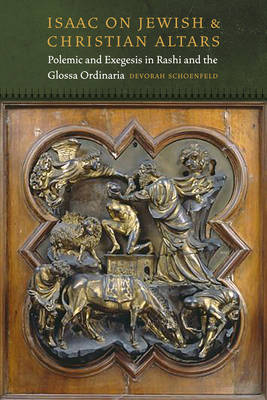
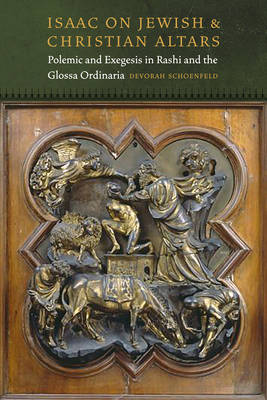
Isaac on Jewish and Christian Altars
Polemic and Exegesis in Rashi and the Glossa Ordinaria
Devorah Schoenfeld
€ 96,95
+ 193 punten
Omschrijving
Devorah Schoenfeld's new work offers an in-depth examination of two of the most influential Christian and Jewish Bible commentaries of the High Middle Ages. The Glossa Ordinaria and Rashi's commentary were standard texts for Bible study in the High Middle Ages, and Rashi's influence continues to the present day. Although Rashi's commentary and the Glossa developed at the same time with no known contact between them, they shared a way of reading text that shaped their interpretations of the central religious narrative of the Binding of Isaac. Schoenfeld's text examines each commentary unto itself and offers a detailed comparison, one that illustrates the similarities between Rashi and the Gloss that derive not merely from their shared late antique heritage but also from their common twelfth-century context, and the Jewish-Christian polemic in which they both, implicitly or explicitly, take part.
Specificaties
Betrokkenen
- Auteur(s):
- Uitgeverij:
Inhoud
- Aantal bladzijden:
- 240
- Taal:
- Engels
- Reeks:
Eigenschappen
- Productcode (EAN):
- 9780823243495
- Verschijningsdatum:
- 2/11/2012
- Uitvoering:
- Hardcover
- Formaat:
- Genaaid
- Afmetingen:
- 157 mm x 239 mm
- Gewicht:
- 680 g


Alleen bij Standaard Boekhandel
+ 193 punten op je klantenkaart van Standaard Boekhandel
CADEAU

AANGERADEN


Beoordelingen
We publiceren alleen reviews die voldoen aan de voorwaarden voor reviews. Bekijk onze voorwaarden voor reviews.