


- Afhalen na 1 uur in een winkel met voorraad
- Gratis thuislevering in België vanaf € 30
- Ruim aanbod met 7 miljoen producten
- Afhalen na 1 uur in een winkel met voorraad
- Gratis thuislevering in België vanaf € 30
- Ruim aanbod met 7 miljoen producten





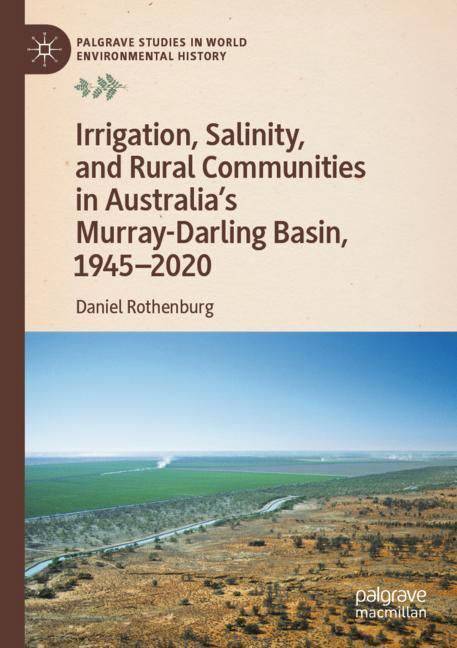
Irrigation, Salinity, and Rural Communities in Australia's Murray-Darling Basin, 1945-2020
Daniel Rothenburg
€ 129,95
+ 259 punten
Uitvoering
Omschrijving
This book explores the issue of salinization in the context of contemporary conflicts about irrigation, water, and the environment in Australia, considering the Murray-Darling Basin in particular. It provides an environmental and social history charting the transformation of rural communities in the basin through the salinization of soils and water. Focusing on the Goulburn-Murray Irrigation district in the southwest of the Murray-Darling basin - the largest irrigation district in Australia - it explores the history of state-directed, large-scale engineering in the district, where the environment has been altered dramatically to facilitate white agricultural settlement inland. Changes to the landscape led to extensive salinization, however - a significant environmental threat in Australia. This book traces the impact of these changes on rural communities, taking a 'bottom-up' approach, highlighting the connections between environmental, social, and political change. It provides animportant reflection on the importance of environmental history for facing the challenges posed by anthropogenic climate change.
Specificaties
Betrokkenen
- Auteur(s):
- Uitgeverij:
Inhoud
- Aantal bladzijden:
- 303
- Taal:
- Engels
- Reeks:
Eigenschappen
- Productcode (EAN):
- 9783031184536
- Verschijningsdatum:
- 14/01/2024
- Uitvoering:
- Paperback
- Formaat:
- Trade paperback (VS)
- Afmetingen:
- 148 mm x 210 mm
- Gewicht:
- 385 g


Alleen bij Standaard Boekhandel
+ 259 punten op je klantenkaart van Standaard Boekhandel
Cadeau

AANGERADEN


Beoordelingen
We publiceren alleen reviews die voldoen aan de voorwaarden voor reviews. Bekijk onze voorwaarden voor reviews.