


- Afhalen na 1 uur in een winkel met voorraad
- Gratis thuislevering in België vanaf € 30
- Ruim aanbod met 7 miljoen producten
- Afhalen na 1 uur in een winkel met voorraad
- Gratis thuislevering in België vanaf € 30
- Ruim aanbod met 7 miljoen producten





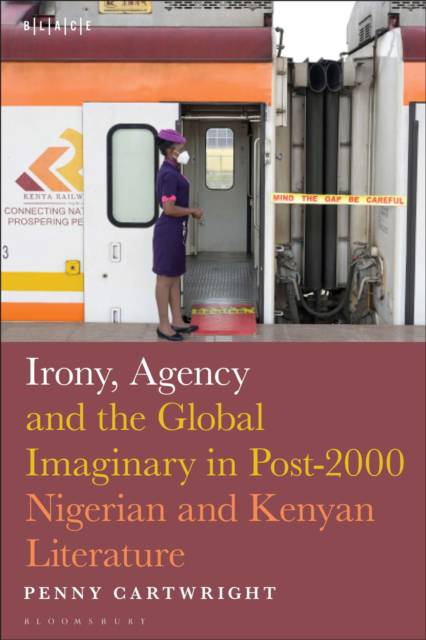
Irony, Agency and the Global Imaginary in Post-2000 Nigerian and Kenyan Literature
Penny Cartwright
€ 203,95
+ 407 punten
Omschrijving
An examination of alternate imaginaries of 'the global' in post-millennium anglophone African literature and the differing forms of agency that these imaginaries produce.
Irony, Agency and the Global Imaginary in Post-2000 Nigerian and Kenyan Literature provides deft and detailed readings of writers' perspectives that theorize 'the global' as experienced through vectors of globality such as the tourism industry, development agencies, multinational media, NGOs and consumerism. Penny Cartwright develops a conceptual distinction between two types of global imaginaries: 'territorial' imaginaries that treat privileged spaces or locations as 'global', thus demanding strategies of physical access and mobility; and 'orientational' imaginaries that treat 'globality' as a disposition or attitude that individuals perform or embody. Drawing detailed case studies from the work of Ngugi wa Thiong'o and Binyavanga Wainaina (Kenya), Chris Abani, Adaobi Tricia Nwaubani and A. Igoni Barrett (Nigeria), Cartwright shows how these different kinds of imaginaries are combined, contrasted and ironized in literary texts. By analyzing Africa-based representations of 'the global', from the millennium period onward, this book considers how global imaginaries are shaped by and inflect distinctive regional experiences, including of postcoloniality, Structural Adjustment, oil economics, multilingualism and humanitarianism. Departing from more extensive recent scholarship on migration narratives, the book contributes insights into literary engagements of 'the global' that arise from Nigerian and Kenyan national spaces and circumstances. It explores the narrative strategies through which alternate ideas of the global are represented, with particular emphasis on ironizing strategies, as well as the kinds of personal and political responses that the various imaginaries produce in characters.Specificaties
Betrokkenen
- Auteur(s):
- Uitgeverij:
Inhoud
- Aantal bladzijden:
- 224
- Taal:
- Engels
- Reeks:
Eigenschappen
- Productcode (EAN):
- 9798765109717
- Verschijningsdatum:
- 5/03/2026
- Uitvoering:
- Hardcover
- Formaat:
- Genaaid
- Afmetingen:
- 152 mm x 229 mm
- Gewicht:
- 467 g


Alleen bij Standaard Boekhandel
+ 407 punten op je klantenkaart van Standaard Boekhandel
Cadeau

AANGERADEN


Beoordelingen
We publiceren alleen reviews die voldoen aan de voorwaarden voor reviews. Bekijk onze voorwaarden voor reviews.