



Je cadeautjes zeker op tijd in huis hebben voor de feestdagen? Kom langs in onze winkels en vind het perfecte geschenk!
- Afhalen na 1 uur in een winkel met voorraad
- Gratis thuislevering in België vanaf € 30
- Ruim aanbod met 7 miljoen producten
Je cadeautjes zeker op tijd in huis hebben voor de feestdagen? Kom langs in onze winkels en vind het perfecte geschenk!
- Afhalen na 1 uur in een winkel met voorraad
- Gratis thuislevering in België vanaf € 30
- Ruim aanbod met 7 miljoen producten





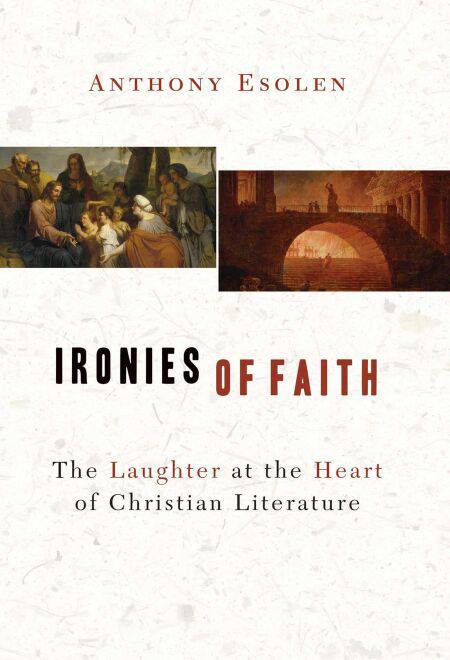
Ironies of Faith E-BOOK
The Laughter at the Heart of Christian Literature
Anthony Esolen
E-book | Engels
€ 16,76
+ 16 punten
Omschrijving
In Ironies of Faith, celebrated Dante scholar and translator Anthony Esolen provides a profound meditation upon the use and place of irony in Christian art and in the Christian life. Beginning with an extended analysis of irony as an essentially dramatic device, Esolen explores those manifestations of irony that appear prominently in Christian thinking and art: ironies of time (for Christians believe in divine Providence, but live in a world whose moments pass away); ironies of power (for Christians believe in an almighty God who took on human flesh, and whose "weakness" is stronger than our greatest enemy, death); ironies of love (for man seldom knows whom to love, or how, or even whom it is that in the depths of his heart he loves best); and the figure of the Child (for Christians ever hear the warning voice of their Savior, who says that unless we become like unto one of these little ones, we shall not enter the Kingdom of God).
Esolen's finely wrought study draws from Augustine, Dante, Shakespeare, Tolkien, Mauriac, Milton Herbert, Hopkins, and Dostoyevsky, among others, including the anonymous author of the medieval poem Pearl. Such authors, Anthony Esolen believes, teach us that the last laugh is on the world, because that grim old world, taking itself so seriously that even its laughter is a sneer, will finally - despite its proud resistance - be redeemed. That is the ultimate irony of faith. Readers who treasure the Christian literary tradition should not miss this illuminating book.
Esolen's finely wrought study draws from Augustine, Dante, Shakespeare, Tolkien, Mauriac, Milton Herbert, Hopkins, and Dostoyevsky, among others, including the anonymous author of the medieval poem Pearl. Such authors, Anthony Esolen believes, teach us that the last laugh is on the world, because that grim old world, taking itself so seriously that even its laughter is a sneer, will finally - despite its proud resistance - be redeemed. That is the ultimate irony of faith. Readers who treasure the Christian literary tradition should not miss this illuminating book.
Specificaties
Betrokkenen
- Auteur(s):
- Uitgeverij:
Inhoud
- Aantal bladzijden:
- 350
- Taal:
- Engels
Eigenschappen
- Productcode (EAN):
- 9781684516230
- Verschijningsdatum:
- 3/04/2023
- Uitvoering:
- E-book
- Beveiligd met:
- Adobe DRM
- Formaat:
- ePub


Alleen bij Standaard Boekhandel
+ 16 punten op je klantenkaart van Standaard Boekhandel
CADEAU


Beoordelingen
We publiceren alleen reviews die voldoen aan de voorwaarden voor reviews. Bekijk onze voorwaarden voor reviews.