


- Afhalen na 1 uur in een winkel met voorraad
- Gratis thuislevering in België vanaf € 30
- Ruim aanbod met 7 miljoen producten
- Afhalen na 1 uur in een winkel met voorraad
- Gratis thuislevering in België vanaf € 30
- Ruim aanbod met 7 miljoen producten





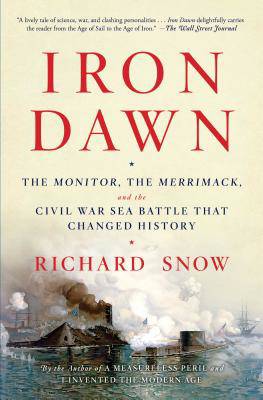
Iron Dawn
The Monitor, the Merrimack, and the Civil War Sea Battle That Changed History
Richard Snow
Paperback | Engels
€ 24,95
+ 49 punten
Omschrijving
"An utterly absorbing account of one of history's most momentous battles" (Forbes) that not only changed the Civil War but the future of all sea power--from acclaimed popular historian Richard Snow, who "writes with verve and a keen eye" (The New York Times Book Review).No single sea battle has had more far-reaching consequences than the one fought in Hampton Roads, Virginia, in 1862. The Confederacy, with no fleet of its own, took a radical step to combat the Union blockade, building an iron fort containing ten heavy guns on the hull of a captured Union frigate named the Merrimack. The North got word of the project, and, in panicky desperation, commissioned an eccentric inventor named John Ericsson to build the Monitor, an entirely revolutionary iron warship. Rushed through to completion in just one hundred days, it mounted only two guns, but they were housed in a shot-proof revolving turret. The ship hurried south from Brooklyn, only to arrive to find the Merrimack had already sunk half the Union fleet--and would be back to finish the job. When she returned, the Monitor was there. She fought the Merrimack to a standstill, and, many believe, saved the Union cause. As soon as word of the fight spread, Great Britain--the foremost sea power of the day--ceased work on all wooden ships. A thousand-year-old tradition ended and the naval future opened. Richly illustrated with photos, maps, and engravings, Iron Dawn "renders all previous accounts of the encounter between the Monitor and the Merrimack as obsolete as wooden war ships" (The Dallas Morning News). Richard Snow brings to vivid life the tensions of the time in this "lively tale of science, war, and clashing personalities" (The Wall Street Journal).
Specificaties
Betrokkenen
- Auteur(s):
- Uitgeverij:
Inhoud
- Aantal bladzijden:
- 416
- Taal:
- Engels
Eigenschappen
- Productcode (EAN):
- 9781476794198
- Verschijningsdatum:
- 24/10/2017
- Uitvoering:
- Paperback
- Formaat:
- Trade paperback (VS)
- Afmetingen:
- 140 mm x 213 mm
- Gewicht:
- 362 g


Alleen bij Standaard Boekhandel
+ 49 punten op je klantenkaart van Standaard Boekhandel
Cadeau

AANGERADEN


Beoordelingen
We publiceren alleen reviews die voldoen aan de voorwaarden voor reviews. Bekijk onze voorwaarden voor reviews.