


- Afhalen na 1 uur in een winkel met voorraad
- Gratis thuislevering in België vanaf € 30
- Ruim aanbod met 7 miljoen producten
- Afhalen na 1 uur in een winkel met voorraad
- Gratis thuislevering in België vanaf € 30
- Ruim aanbod met 7 miljoen producten





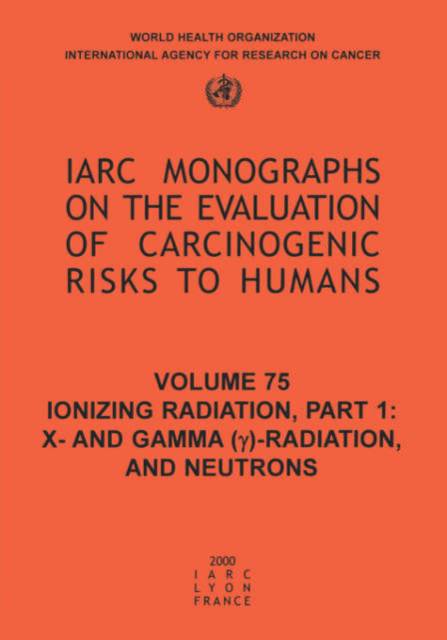
Ionizing Radiation
Part 1: X- And Gamma (Y)-Radiation, and Neutrons
The International Agency for Research on Cancer
€ 73,95
+ 147 punten
Uitvoering
Omschrijving
Evaluates the carcinogenic risks to humans posed by exposure to X- and g-radiation and to neutrons from external sources. The book opens with a general introduction to nomenclature dissymmetric methods and models in the occupational and environmental settings the behavior of radiation in biological tissues and sources of human exposure. Natural background radiation is identified as by far the largest source of exposure for the world's population. The medical use of X-rays and radiopharmaceuticals constitutes the next most significant source followed by exposure from atmospheric testing of nuclear weapons. The collective doses from other sources of radiation are considered much less important. The first and most monograph on X- and g-radiation reviews the large body of evidence arising from the extensive investigation of carcinogenic effects in humans mainly in survivors of the atomic bombings in Japan and patients exposed to radiation for medical reasons. In both groups, an excess number of cases of leukemia and other cancers have been observed. Irradiation during childhood increases the risk of thyroid cancer while an increase in breast cancer risk has been observed after irradiation of pre-menopausal women. X-rays and g-rays have also been tested for carcinogenicity at various doses and under various conditions in a range of animal species. In adult animals, the incidences of leukemia and of mammary lung and thyroid tumors were increased in a dose-dependent manner with both types of radiation. Prenatal exposure also gave rise to increased incidences of various types of tumors. Based on this evidence the monograph concludes that X-radiation and g-radiation are carcinogenic to humans. The carcinogenic risk to humans posed by exposure to neutrons is evaluated in the second monograph, which concentrates on risks associated with the exposure of patients to neutron radiotherapy beams and exposures of aircraft passengers and crew. In high-altitude cities neutrons can constitute as much as 25% of background radiation. Neutrons from various sources with wide ranges of mean energy have been tested for carcinogenicity in different animal species and at various doses and dose rates. In adult animals, the incidences of leukemia and ovarian mammary lung and liver cancer were increased in a dose-related manner. Prenatal and parental exposure resulted in increased incidences of liver tumors in the offspring. In virtually all studies, neutrons were more effective in inducing tumors than were X-rays and g-rays when compared on the basis of absorbed dose. Although no adequate human carcinogenicity data were available for assessment, the monograph used other relevant data including evidence of DNA damage to reach the conclusion that neutrons are carcinogenic to humans.
Specificaties
Betrokkenen
- Auteur(s):
- Uitgeverij:
Inhoud
- Aantal bladzijden:
- 491
- Taal:
- Engels
- Reeks:
- Reeksnummer:
- nr. 76
Eigenschappen
- Productcode (EAN):
- 9789283212751
- Verschijningsdatum:
- 1/05/2000
- Uitvoering:
- Paperback
- Formaat:
- Trade paperback (VS)
- Afmetingen:
- 178 mm x 254 mm
- Gewicht:
- 870 g


Alleen bij Standaard Boekhandel
+ 147 punten op je klantenkaart van Standaard Boekhandel

Beoordelingen
We publiceren alleen reviews die voldoen aan de voorwaarden voor reviews. Bekijk onze voorwaarden voor reviews.