


- Afhalen na 1 uur in een winkel met voorraad
- Gratis thuislevering in België vanaf € 30
- Ruim aanbod met 7 miljoen producten
- Afhalen na 1 uur in een winkel met voorraad
- Gratis thuislevering in België vanaf € 30
- Ruim aanbod met 7 miljoen producten





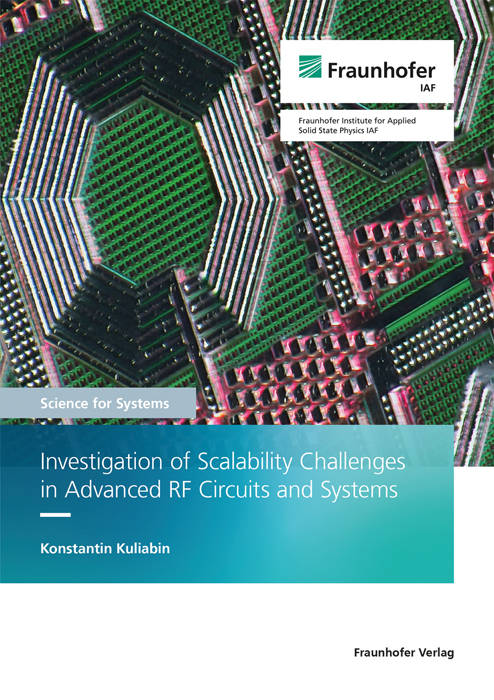
Investigation of Scalability Challenges in Advanced RF Circuits and Systems
Konstantin Kuliabin
€ 39,45
+ 78 punten
Omschrijving
As we stand at the border of a new technological era, RF components are becoming the core enablers of cutting-edge technologies. The most innovative products today often resemble a patchwork of complex microwave components, making it challenging to maintain, produce, and improve. To transition these systems from the lab to everyday life, scalability improvements are essential.
This dissertation explores the scalability challenges in two forefront domains: quantum computing and 6G communications. In the field of quantum computing, the focus is on improving low-noise amplifiers to transition from hybrid to fully integrated designs, using advanced technologies such as mHEMT and CMOS. In the domain of next-generation communications, the research addresses the challenges of phased-array antennas beyond 300 GHz, where tight integration is crucial for optimal performance. This work demonstrates the ways to achieve more scalable, efficient, and accessible technological solutions in these rapidly evolving fields.
This dissertation explores the scalability challenges in two forefront domains: quantum computing and 6G communications. In the field of quantum computing, the focus is on improving low-noise amplifiers to transition from hybrid to fully integrated designs, using advanced technologies such as mHEMT and CMOS. In the domain of next-generation communications, the research addresses the challenges of phased-array antennas beyond 300 GHz, where tight integration is crucial for optimal performance. This work demonstrates the ways to achieve more scalable, efficient, and accessible technological solutions in these rapidly evolving fields.
Specificaties
Betrokkenen
- Auteur(s):
- Uitgeverij:
Inhoud
- Taal:
- Engels
- Reeks:
- Reeksnummer:
- nr. 67
Eigenschappen
- Productcode (EAN):
- 9783839621547
- Uitvoering:
- Paperback
- Afmetingen:
- 148 mm x 210 mm


Alleen bij Standaard Boekhandel
+ 78 punten op je klantenkaart van Standaard Boekhandel
Cadeau

AANGERADEN


Beoordelingen
We publiceren alleen reviews die voldoen aan de voorwaarden voor reviews. Bekijk onze voorwaarden voor reviews.