



- Afhalen na 1 uur in een winkel met voorraad
- In januari gratis thuislevering in België
- Ruim aanbod met 7 miljoen producten
- Afhalen na 1 uur in een winkel met voorraad
- In januari gratis thuislevering in België
- Ruim aanbod met 7 miljoen producten





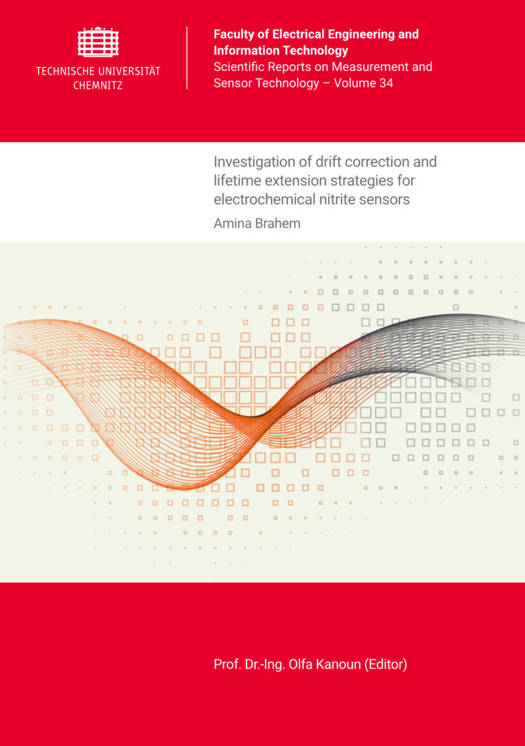
Investigation of drift correction and lifetime extension strategies for electrochemical nitrite sensors
Amina Brahem
€ 25,95
+ 51 punten
Omschrijving
Excessive nitrite in water poses serious health and environmental risks, requiring reliable long-term monitoring. Electrochemical sensors offer advantages due to their sensitivity, low cost, and ease of use; however, they suffer from aging, which affects accuracy over time. This thesis addresses this limitation by developing and optimizing a nitrite sensor based on screen-printed carbon electrodes modified with electrodeposited gold. The sensor achieved promising performance, including a 15-day shelf life. A multidisciplinary study investigated aging mechanisms using electrochemical techniques (voltammetry, impedance spectroscopy) and physical methods (Raman, FTIR, SEM). The double-layer capacitance (Cdl) was identified as the most aging-sensitive parameter. An accelerated aging protocol in contaminated solution was designed to simulate long-term behavior. A systematic methodology for lifetime estimation, drift correction, and life extension was proposed. Applying an anti-fouling polymer layer extended the shelf life to 18 days. A novel correction method ensured accuracy despite aging and was validated in tap and groundwater. The approach enables sensor optimization and reliability in environmental applications.
Specificaties
Betrokkenen
- Auteur(s):
- Uitgeverij:
Inhoud
- Taal:
- Engels
- Reeks:
- Reeksnummer:
- nr. 34
Eigenschappen
- Productcode (EAN):
- 9783961002443
- Uitvoering:
- Paperback
- Afmetingen:
- 148 mm x 19 mm
- Gewicht:
- 460 g


Alleen bij Standaard Boekhandel
+ 51 punten op je klantenkaart van Standaard Boekhandel
Cadeau

AANGERADEN


Beoordelingen
We publiceren alleen reviews die voldoen aan de voorwaarden voor reviews. Bekijk onze voorwaarden voor reviews.