


- Afhalen na 1 uur in een winkel met voorraad
- Gratis thuislevering in België vanaf € 30
- Ruim aanbod met 7 miljoen producten
- Afhalen na 1 uur in een winkel met voorraad
- Gratis thuislevering in België vanaf € 30
- Ruim aanbod met 7 miljoen producten





€ 98,95
+ 197 punten
Omschrijving
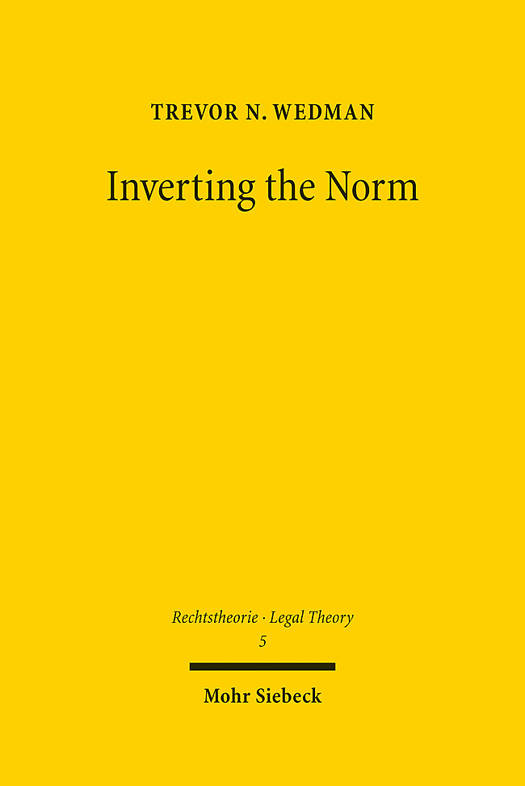
Trevor N. Wedman seeks to understand the key assumptions underlying modern legal theory. Going back to Hobbes, but also making use of the developments in the theory of action and language philosophy over the past century, he breaks down the static conception of the state into one dependent on the actions and reflections of individuals, i.e., its citizens. He develops a social ontological theory of the law, in which the law is not taken as a mere given, but as an institutional fact. He criticizes both the Kelsenian conception of the Basic Norm and the Hartian notion of the Rule of Recognition as failing to account for the agency of individuals. The author turns to the work of one of Kelsen's contemporaries, Felix Somlo, in order to develop an alternative conception of the law that operates not from the top down, but from the bottom up. In this way, the law itself comes into focus as that which results from the reasoned jurisprudential reflection on the reality of meanings and actions.
Specificaties
Betrokkenen
- Auteur(s):
- Uitgeverij:
Inhoud
- Aantal bladzijden:
- 191
- Taal:
- Engels
- Reeks:
- Reeksnummer:
- nr. 5
Eigenschappen
- Productcode (EAN):
- 9783161616914
- Verschijningsdatum:
- 1/09/2022
- Uitvoering:
- Hardcover
- Formaat:
- Genaaid
- Afmetingen:
- 231 mm x 154 mm
- Gewicht:
- 3755 g


Alleen bij Standaard Boekhandel
+ 197 punten op je klantenkaart van Standaard Boekhandel
Cadeau

AANGERADEN


Beoordelingen
We publiceren alleen reviews die voldoen aan de voorwaarden voor reviews. Bekijk onze voorwaarden voor reviews.