


- Afhalen na 1 uur in een winkel met voorraad
- Gratis thuislevering in België vanaf € 30
- Ruim aanbod met 7 miljoen producten
- Afhalen na 1 uur in een winkel met voorraad
- Gratis thuislevering in België vanaf € 30
- Ruim aanbod met 7 miljoen producten





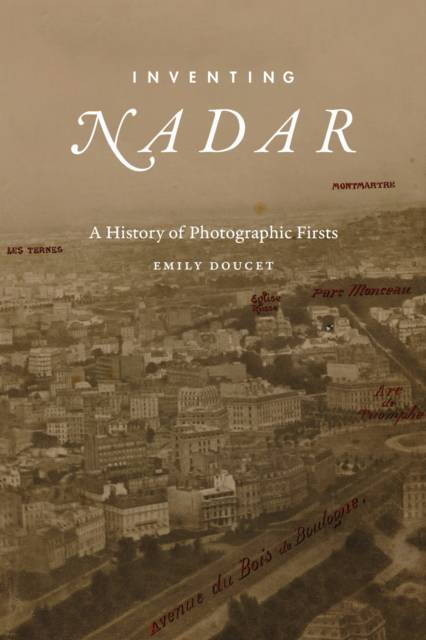
Omschrijving
Félix Nadar took the first aerial photograph in 1858, so the story goes. The evidence, Emily Doucet notes, is mixed. In Inventing Nadar, Doucet analyzes the historical and material production of the nineteenth-century Parisian photographer's famous and numerous photographic firsts. Focusing on these oft-labeled groundbreaking elements of his career, she deconstructs Nadar's legacy as a prime protagonist in the history of photography by interrogating the media techniques used to construct his invention narratives. Doucet highlights this highly mediated process as one that canonized novel applications of photography as discrete techniques with single authors and inventors. Looking to this process of mediation through the institutions and individuals that shaped Nadar's archives, Doucet unpacks assumptions of Nadar as a master of early photography and shows how the medium is enmeshed in larger histories of media, science, and technology. The result is both a new account of Nadar's place in photographic history and a critical study of how stories of innovation take shape.
Specificaties
Betrokkenen
- Auteur(s):
- Uitgeverij:
Inhoud
- Aantal bladzijden:
- 238
- Taal:
- Engels
- Reeks:
Eigenschappen
- Productcode (EAN):
- 9781478033721
- Verschijningsdatum:
- 21/04/2026
- Uitvoering:
- Hardcover
- Formaat:
- Genaaid
- Afmetingen:
- 152 mm x 229 mm
- Gewicht:
- 498 g


Alleen bij Standaard Boekhandel
+ 366 punten op je klantenkaart van Standaard Boekhandel
Cadeau

AANGERADEN


Beoordelingen
We publiceren alleen reviews die voldoen aan de voorwaarden voor reviews. Bekijk onze voorwaarden voor reviews.