


- Afhalen na 1 uur in een winkel met voorraad
- Gratis thuislevering in België vanaf € 30
- Ruim aanbod met 7 miljoen producten
- Afhalen na 1 uur in een winkel met voorraad
- Gratis thuislevering in België vanaf € 30
- Ruim aanbod met 7 miljoen producten





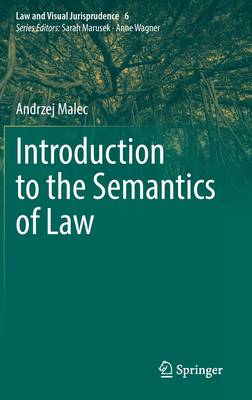
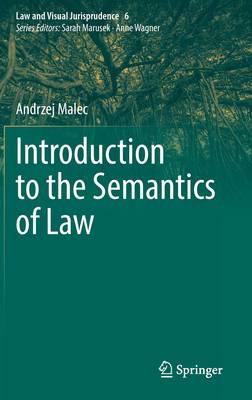
Introduction to the Semantics of Law
Andrzej Malec
€ 129,95
+ 259 punten
Uitvoering
Eenvoudig bestellen
Veilig betalen


Gratis thuislevering vanaf € 30 (via bpost)
Gratis levering in je Standaard Boekhandel
Omschrijving
This book offers an introduction to the language of law from the perspective of logical semantics. As a logical tool, Boguslaw Wolniewicz's formal ontology of situations is adapted. The central issue addressed is the meaning of normative statements, primarily legal norms. The main outcome of the book consists in explications of several legal notions (including legal events, legal acts and legal rules) in terms of the formal ontology of situations. In addition, the book concludes that legal norms are sentences in a logical sense, so some are true, while others are false, and that their logical value does not depend on whether or not they were adopted in the law-making process. Lastly, the book contends that there are semantic relations between orders that are similar to entailment, contradiction, opposition, and sub-opposition, despite the fact that orders are not sentences in a logical sense, i.e., they are neither true nor false.The book alsopresents some original Wittgenstein-style deontic logics built on the first order logic. The formal results are applied to selected problems in the theory of law, including the problem of the possibility of algorithmic application of legal norms.
Specificaties
Betrokkenen
- Auteur(s):
- Uitgeverij:
Inhoud
- Aantal bladzijden:
- 141
- Taal:
- Engels
- Reeks:
- Reeksnummer:
- nr. 6
Eigenschappen
- Productcode (EAN):
- 9783030956783
- Verschijningsdatum:
- 19/04/2022
- Uitvoering:
- Hardcover
- Formaat:
- Genaaid
- Afmetingen:
- 156 mm x 234 mm
- Gewicht:
- 399 g


Alleen bij Standaard Boekhandel
+ 259 punten op je klantenkaart van Standaard Boekhandel
CADEAU

AANGERADEN


Beoordelingen
We publiceren alleen reviews die voldoen aan de voorwaarden voor reviews. Bekijk onze voorwaarden voor reviews.