


- Afhalen na 1 uur in een winkel met voorraad
- Gratis thuislevering in België vanaf € 30
- Ruim aanbod met 7 miljoen producten
- Afhalen na 1 uur in een winkel met voorraad
- Gratis thuislevering in België vanaf € 30
- Ruim aanbod met 7 miljoen producten





€ 174,95
Omschrijving
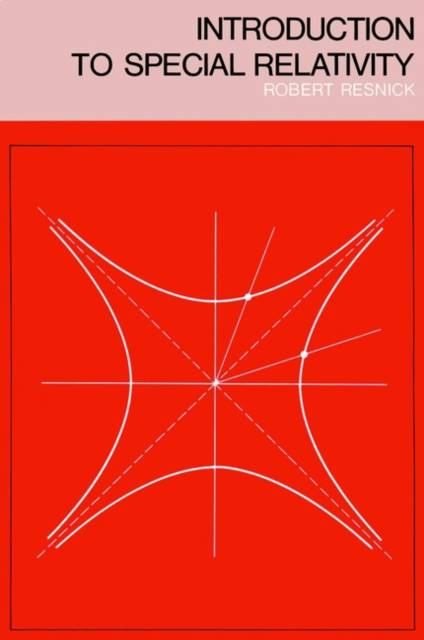
This book gives an excellent introduction to the theory of special relativity. Professor Resnick presents a fundamental and unified development of the subject with unusually clear discussions of the aspects that usually trouble beginners. He includes, for example, a section on the common sense of relativity. His presentation is lively and interspersed with historical, philosophical and special topics (such as the twin paradox) that will arouse and hold the reader's interest. You'll find many unique features that help you grasp the material, such as worked-out examples, summary tables, thought questions and a wealth of excellent problems. The emphasis throughout the book is physical. The experimental background, experimental confirmation of predictions, and the physical interpretation of principles are stressed. The book treats relativistic kinematics, relativistic dynamics, and relativity and electromagnetism and contains special appendices on the geometric representation of space-time and on general relativity. Its organization permits an instructor to vary the length and depth of his treatment and to use the book either with or following classical physics. These features make it an ideal companion for introductory course
Specificaties
Betrokkenen
- Auteur(s):
- Uitgeverij:
Inhoud
- Aantal bladzijden:
- 240
- Taal:
- Engels
Eigenschappen
- Productcode (EAN):
- 9780471717256
- Verschijningsdatum:
- 16/01/1991
- Uitvoering:
- Paperback
- Formaat:
- Trade paperback (VS)
- Afmetingen:
- 153 mm x 229 mm
- Gewicht:
- 326 g


Alleen bij Standaard Boekhandel
Cadeau

AANGERADEN


Beoordelingen
We publiceren alleen reviews die voldoen aan de voorwaarden voor reviews. Bekijk onze voorwaarden voor reviews.