



Je cadeautjes zeker op tijd in huis hebben voor de feestdagen? Kom langs in onze winkels en vind het perfecte geschenk!
- Afhalen na 1 uur in een winkel met voorraad
- Gratis thuislevering in België vanaf € 30
- Ruim aanbod met 7 miljoen producten
Je cadeautjes zeker op tijd in huis hebben voor de feestdagen? Kom langs in onze winkels en vind het perfecte geschenk!
- Afhalen na 1 uur in een winkel met voorraad
- Gratis thuislevering in België vanaf € 30
- Ruim aanbod met 7 miljoen producten





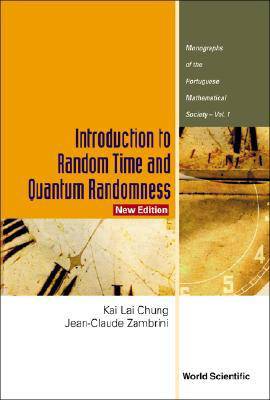
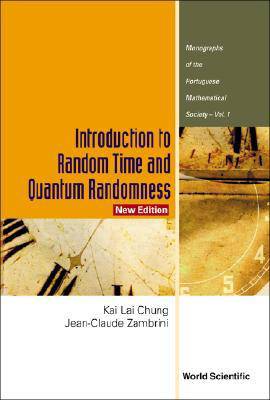
Introduction to Random Time and Quantum Randomness (New Edition)
Kai Lai Chung, Jean-Claude Zambrini
€ 67,45
+ 134 punten
Omschrijving
This book is made up of two essays on the role of time in probability and quantum physics. In the first one, K L Chung explains why, in his view, probability theory starts where random time appears. This idea is illustrated in various probability schemes and the deep impact of those random times on the theory of the stochastic process is shown.In the second essay J-C Zambrini shows why quantum physics is not a regular probabilistic theory, but also why stochastic analysis provides new tools for analyzing further the meaning of Feynman's path integral approach and a number of foundational issues of quantum physics far beyond what is generally considered. The role of the time parameter, in this theory, is critically re-examined and a fresh way to approach the long-standing problem of the quantum time observable is suggested.
Specificaties
Betrokkenen
- Auteur(s):
- Uitgeverij:
Inhoud
- Aantal bladzijden:
- 224
- Taal:
- Engels
- Reeks:
- Reeksnummer:
- nr. 1
Eigenschappen
- Productcode (EAN):
- 9789812384157
- Verschijningsdatum:
- 30/05/2003
- Uitvoering:
- Paperback
- Formaat:
- Trade paperback (VS)
- Afmetingen:
- 150 mm x 226 mm
- Gewicht:
- 408 g


Alleen bij Standaard Boekhandel
+ 134 punten op je klantenkaart van Standaard Boekhandel
CADEAU


Beoordelingen
We publiceren alleen reviews die voldoen aan de voorwaarden voor reviews. Bekijk onze voorwaarden voor reviews.