


- Afhalen na 1 uur in een winkel met voorraad
- Gratis thuislevering in België vanaf € 30
- Ruim aanbod met 7 miljoen producten
- Afhalen na 1 uur in een winkel met voorraad
- Gratis thuislevering in België vanaf € 30
- Ruim aanbod met 7 miljoen producten





€ 195,45
+ 390 punten
Uitvoering
Eenvoudig bestellen
Veilig betalen


Gratis thuislevering vanaf € 30 (via bpost)
Gratis levering in je Standaard Boekhandel
Omschrijving
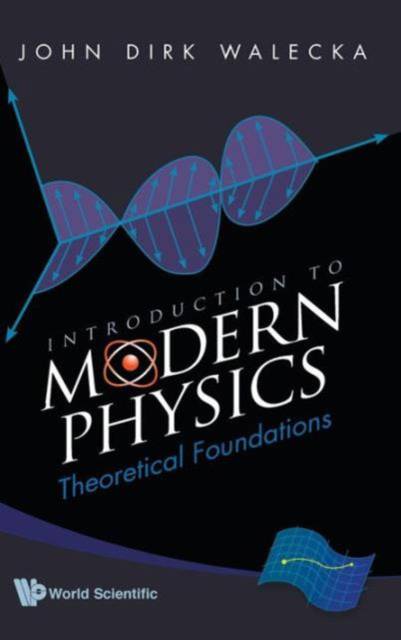
Our understanding of the physical world was revolutionized in the twentieth century -- the era of "modern physics''. This book, aimed at the very best students, presents the foundations and frontiers of today's physics. It focuses on the following topics: quantum mechanics; applications in atomic, nuclear, particle, and condensed-matter physics; special relativity; relativistic quantum mechanics, including the Dirac equation and Feynman diagrams; quantum fields; and general relativity. The aim is to cover these topics in sufficient depth such that things "make sense'' to students and they can achieve an elementary working knowledge of them. Many problems are included, a great number of which take dedicated readers just as far as they want to go in modern physics. Although the book is designed so that one can, in principle, read and follow the text without doing any of the problems, the reader is urged to attempt as many of them as possible. Several appendices help bring the reader up to speed on any additional required mathematics. With very few exceptions, the reader should then find the text, together with the appendices and problems, to be self-contained.
Specificaties
Betrokkenen
- Auteur(s):
- Uitgeverij:
Inhoud
- Aantal bladzijden:
- 496
- Taal:
- Engels
Eigenschappen
- Productcode (EAN):
- 9789812812247
- Verschijningsdatum:
- 1/07/2008
- Uitvoering:
- Hardcover
- Formaat:
- Genaaid
- Afmetingen:
- 150 mm x 231 mm
- Gewicht:
- 839 g



Alleen bij Standaard Boekhandel
+ 390 punten op je klantenkaart van Standaard Boekhandel
CADEAU

AANGERADEN


Beoordelingen
We publiceren alleen reviews die voldoen aan de voorwaarden voor reviews. Bekijk onze voorwaarden voor reviews.